

 Back
Back
FOSSIL FUELS: Fracking work in the Pittsburgh area is turning local residents’ water from drinkable to nonpotable and laden with chemicals, but a nearby driller is offering to provide water in exchange for signing an agreement with non-disclosure terms. (Public Source)
ALSO: Federal energy regulators authorize operations on the Mountain Valley pipeline, which will carry gas from fields in Pennsylvania and Ohio to points in the mid-Atlantic and further south. (Associated Press)
WIND:
SOLAR:
AFFORDABILITY:
POLICY: Maine environmental officials say the state is already 91% of the way to achieving its carbon neutrality by 2045 goal by slashing greenhouse gas emissions and increasing carbon sequestration, but many buildings still rely on petroleum. (Portland Press Herald)
NUCLEAR:
TRANSIT:
ELECTRIC VEHICLES:
Illinois’s carbon dioxide pipeline and sequestration law passed May 26 is being described as among the nation’s strictest. It is only the second carbon dioxide pipeline moratorium in the U.S., after California, and it creates a significant permitting process once the moratorium is lifted.
But landowners and advocates are still unhappy with several key provisions left out of the law, and said they are exploring options to end the use of eminent domain for carbon pipelines and protect landowners from carbon being sequestered in their underground pore space against their will.
“There’s a lot of good in there, but it definitely is a work in progress in terms of guard rails,” said Jennifer Cassel, a senior attorney for Earthjustice who worked with the Illinois Clean Jobs Coalition that endorsed the new law after members previously worked with lawmakers on a stronger bill. “The federal uncertainty was part of the push, and there’s so much of a gold rush already happening,” with applications for 22 carbon dioxide injection wells pending in the state, plus various pipeline proposals.
SB 1289, or the SAFE Act, allows a company seeking to sequester carbon to move forward if the owners of 75% of the affected land agree to the plan, which provides them compensation. That means, critics note, that owners of 25% of the land cannot stop a project, even if they are opposed. Owners of small several-acre parcels would have few rights compared to large landowners, noted Pam Richart, co-founder of the Coalition to Stop CO2 Pipelines.
The coalition had worked with lawmakers on a much more stringent bill, which would have limited the use of eminent domain to acquire land for pipelines and sequestration. It would also have banned the injection of carbon dioxide through the Mahomet Aquifer. The Farm Bureau opposed the SAFE Act in part because it didn’t address eminent domain, though the new law includes some protections regarding compensation for land damage.
“Landowners are profoundly disappointed that the act was approved without eminent domain [limits],” Richart said. “The landowner protections weren’t as strong as we hoped.”
The coalition’s preferred bill would not have allowed forced integration of pore space against landowners’ will. Richart said they expected some compromise on that front, but not to the extent enshrined in the SAFE Act.
“That’s not how this is supposed to work,” she said. “If a project is in the public interest, you wouldn’t expect landowners of 25% of the land to hold out.”
The SAFE Act stands for Safety and Aid for the Environment in Carbon Capture and Sequestration. It still awaits signature by Gov. J.B. Pritzker, who has indicated he will sign it, and bills become law after 60 days in Illinois if the governor takes no action.
Richart said advocates don’t plan to “reopen the whole process” around legislation, but hope to work with legislators on a trailer bill that could increase protections for landowners.
“A lot of legislators expressed serious concern about the aquifer, I wouldn’t be surprised if those issues and potentially others come back up in some form,” Cassel said.
The new law places a moratorium on new carbon dioxide pipelines for two years or until the federal Pipeline and Hazardous Materials Safety Administration issues regulations for carbon dioxide pipelines, which are in the works. The previous bill advocates backed included a moratorium of four years or until the federal regulations are adopted. Cassel said labor unions felt that moratorium was too long.
Richart said the Illinois law is only a “quasi-moratorium” since companies can begin the application process for new pipelines even before the PHMSA regulations come out.
Meanwhile the SAFE Act does not include setbacks from properties for carbon dioxide pipelines. If the PHMSA regulations do not include setbacks, which is likely, Illinois advocates could push for setbacks under the permitting process created by the SAFE Act, since it allows for additional safety measures to be developed provided they are not in conflict with federal regulations.
Advocates say county governments, which have in multiple cases refused to approve sequestration sites connected to pipelines, could work together to push for setback policy.
Advocates are grateful for a robust public engagement process created by the new law.
“Before there was no requirement to notify anybody about a carbon dioxide pipeline except when the Illinois Commerce Commission was ready to begin its application process,” said Richart, citing two recent controversial proposals. “Wolf never notified anybody, One Earth never notified anybody. The commerce commission just said, ‘You better come to this hearing, it might be subject to eminent domain.’”
The Illinois Commerce Commission decides whether a given proposal is in the public interest and able to invoke eminent domain, but previously the commission had no authority over carbon sequestration sites and its consideration of pipelines was largely limited to property values.
The SAFE Act creates a permitting process that requires companies hold two public meetings in each affected county and post materials about the proposal and public comment process. Under the new law, the Illinois Commerce Commission can consider safety and other information in deciding whether to grant eminent domain powers.
Under the new law, companies must also pay into an emergency response fund and create an emergency plan, which entails modeling about possible risks and the expected distribution of carbon dioxide plumes in case of a leak.
“They have to do computational fluid dynamics modeling, and they have to make it public, at a time when there is a definite movement by pipeline developers to make their modeling proprietary, confidential,” said Richart. “So this is huge.”
Companies doing carbon injection and sequestration must also put up money for future environmental mitigation, so future costs don’t fall on the state. The law does not allow self-bonding, a controversial financing mechanism used by coal companies in the past that ultimately forced the state to foot the bill for mine cleanup.
The SAFE Act also enshrines safeguards to make sure that carbon capture and sequestration doesn’t ultimately lead to an increase in air pollution by allowing coal plants to keep operating, and it prohibits the use of carbon dioxide for enhanced oil recovery.
These protections gained approval from environmental justice organizations like the Little Village Environmental Justice Organization, a member of the Illinois Clean Jobs Coalition.
The Illinois Corn Growers Association and Illinois Renewable Fuels Association also backed the new law. Their members stand to benefit from the expansion of the ethanol industry, which depends on carbon sequestration to reduce its greenhouse gas emissions. While carbon capture and sequestration was launched in Illinois in relation to coal plants, recent pipeline proposals have focused primarily on connecting ethanol plants to sequestration sites.
State Rep. Ann Williams, a sponsor of the law, said in a statement that:
“Illinois is a national leader on climate and energy policy, and SB 1289 ensures that if companies are going to use CCS as a climate mitigation strategy, they will need to meet some of the strongest standards in the nation. The CCS protections bill ensures critical guardrails are in place to protect Illinois taxpayers, landowners and our environment.”
OIL & GAS: A New Mexico court rejects an industry request to toss out an environmentalists’ lawsuit accusing the state of failing to meet its constitutional obligation to protect citizens from oil and gas pollution. (Associated Press)
ALSO: Environmentalists sue to block federal Bureau of Land Management oil and gas drilling permit approvals in and around an eastern Colorado national grassland, saying the agency didn’t adequately consider impacts. (news release)
CLIMATE:
GRID: Amazon scraps a plan to power its eastern Oregon data centers with natural gas-powered fuel cells after advocates protest its reliance on methane. (Oregonian)
NUCLEAR: Bill Gates attends his company’s liquid sodium testing facility groundbreaking ceremony at the site of an advanced nuclear reactor planned for a Wyoming coal community. (WyoFile)
OVERSIGHT: Arizona advocates push back on a company’s bid to exempt its proposed 200 MW natural gas plant expansion from environmental review, saying it would undermine regulators’ oversight. (KJZZ)
UTILITIES: San Diego’s city council votes to reject a bid that would allow voters to decide whether to replace SDG&E with a municipal utility. (KUSI)
SOLAR:
SYNTHETIC FUELS: A Nevada startup working to convert solid landfill waste into synthetic petroleum lays off most of its staff and shutters its Reno facility following permitting and operational setbacks. (Chemical & Engineering News)
HYDROGEN: An Oregon startup says it has successfully produced green hydrogen using power from a wind turbine mounted on a ship. (Power)
COAL: Utah energy experts predict lawmakers’ push to block federal regulations and keep coal plants running may hamper energy innovation and ultimately lead to more expensive, dirtier and less reliable power generation. (Utah News Dispatch)
MINING: Nevada environmental and Indigenous advocates slam the federal Bureau of Land Management’s review of the proposed Rhyolite Ridge lithium-boron mine, saying it imperils endangered species and fails to include a groundwater mitigation plan. (Nevada Current)
METHANE: Washington state implements rules aimed at reducing solid waste landfills’ methane emissions by requiring them to monitor and repair leaks and install equipment to capture the potent greenhouse gas. (Washington State Standard)
COMMENTARY: An Indigenous advocate calls on the federal Bureau of Land Management to avoid perpetuating energy injustice by engaging with tribal nations as it develops its new Western solar plan. (Santa Fe New Mexican)
OIL & GAS: A consumer advocacy group files a lawsuit claiming GE failed to warn consumers about the dangers of its gas stoves, hoping Washington, D.C.’s consumer protection law could make all gas stove manufacturers disclose their products’ indoor air pollution risks. (E&E News)
ALSO:
CLIMATE:
EQUITY: A study shows electricity shutoffs disproportionately affect Black and Hispanic families in Minnesota, but advocates lack data to make a similar case nationwide. (Grist)
PIPELINES: A Mountain Valley Pipeline official tells federal regulators that, after six years of delays and cost overruns, the project finally is “mechanically complete” and requests authorization to begin transporting natural gas this week. (Roanoke Times)
GRID: A federal energy regulator says new transmission regulations are modeled off long-term modeling underway by regional grid operator MISO. (Star Tribune)
WIND: New York officials break ground on an $861 million facility on Brooklyn’s waterfront to support construction of the Empire Wind project. (Spectrum News)
SOLAR:
CARBON CAPTURE: Landowners and advocates say Illinois’ new restrictions on carbon capture and storage don’t go far enough and should end the use of eminent domain for pipelines and give more protection to landowners. (Energy News Network)
NUCLEAR:
HYDROGEN: An Oregon startup says it has successfully produced green hydrogen using power from a wind turbine mounted on a ship. (Power)
WIND: New York officials break ground on an $861 million facility on Brooklyn’s waterfront to support construction of the Empire Wind project. (Spectrum News)
ALSO: Massachusetts Gov. Maura Healey touts the state’s efforts to help students prepare for careers in the clean energy sector. (MV Times)
GRID: In a report released last week, New York’s grid operator warns of reliability concerns as fossil fuel retirements outpace new clean energy development, and data centers and other energy-intensive projects increase demand. (Reuters)
STORAGE:
TRANSPORTATION:
SOLAR:
CARBON CAPTURE: A Pennsylvania bill would allow development of underground carbon capture with consent of 60% of landowners, which advocates say is “setting the bar very low.” (Capital and Main)
HYDROPOWER: Industries push back on a proposal to remove four dams in Maine, which collectively could support nearly 47 MW of electricity, according to the company that owns them. (Bangor Daily News)
CLIMATE:
COMMENTARY: An editorial praises Maryland’s progress on reducing emissions, but says lawmakers need to do more to ensure the transition is affordable. (Baltimore Sun)
Massachusetts environmental justice advocates say the $5 billion statewide energy efficiency plan that could take effect next year needs to do even more to reach low-income residents, renters, and other populations who have traditionally received fewer benefits.
The plan, which will guide efficiency programming from 2025 through 2027, outlines wide-ranging initiatives that would support weatherization and heat pumps for homes and small businesses, improve the customer experience with more timely rebate processing and increased multilingual support, and expand the energy efficiency workforce. The proposed plan calls out equity as a major priority.
“There have certainly been some changes in this latest draft we’re pleased to see, but there is definitely a lot more that needs to be done, especially in the realms of equity and affordability and justice,” said Priya Gandbhir, senior attorney at the Conservation Law Foundation. “The good news is we’re still working on this, so there’s some time for improvement.”
Massachusetts has long been considered a leader in energy efficiency, ranking at or near the top of the American Council for an Energy-Efficient Economy’s annual State Energy Efficiency Scorecard for more than 10 years. The core of the state’s efficiency efforts is Mass Save, a partnership between gas and electric utilities, created in 2008, that provides education, energy audits, rebates on efficient appliances, low and no-cost weatherization services, and financing for efficiency projects.
Mass Save programming is guided by the three-year energy efficiency plans put forth by the major utilities in collaboration with the state Energy Efficiency Advisory Council, and approved by state public utilities regulators. Over the past several years, legislation has required that Mass Save prioritize reducing greenhouse gas emissions, rather than focusing only on using less energy.
“Mass Save needs to be a tool not just for energy efficiency but also for decarbonization,” said Hessann Farooqi, executive director of the Boston Climate Action Network.
In recent years, there has also been an effort to ensure the benefits of Mass Save programs are distributed equitably. A 2020 study by the utilities found that communities with lower incomes, higher proportions of residents of color, and more renters were far less likely to have used Mass Save services.
Following this report, the three-year plan covering 2022 to 2024 included several provisions intended to address these disparities, including a 50% higher budget for income-eligible services, financial incentives for utilities to serve lower-income households, and grants to community organizations that can help connect residents to information about Mass Save benefits.
The plan’s focus on equity was hailed by advocates.
“We’ve seen a dramatic increase in production and service and savings because of the increased budget,” said Brian Beote, an Energy Efficiency Advisory Council member and director of energy efficiency operations for housing security nonprofit Action Inc. “We’ve been able to bring on more contractors and serve more households.”
This latest plan continues the focus on equity for underserved populations in several ways. The draft plan increases the budget for services to income-eligible households, defined as those with incomes below 80% of the area median, from roughly $600 million to nearly $1 billion, the highest number ever proposed.
The draft plan also attempts to simplify the process of obtaining benefits for residents in areas that have been marginalized in the past. The plan identifies 21 “equity communities” – municipalities in which more than 35% of residents are renters and more than half of households qualify as low or moderate income. Residents in these communities would be eligible for no-cost weatherization and electrification, often without income verification, and rental properties would be able to receive low-cost weatherization and electrification services.
This approach might mean higher-income customers receive no-cost services they might otherwise have had to pay for, but supporters say the likely benefits outweigh this possibility.
“On balance, we’re going to get more of those low- to moderate-income customers and that is really a key goal,” Farooqi said.
In addition, the proposed plan would expand the Community First Partnership program, which provides funding to nonprofits and municipalities to target outreach and education about Mass Save’s offerings, using their knowledge of their communities and populations.
Still, the plan misses several opportunities to make even greater strides toward equity, advocates said. At the heart of their argument are funding levels: The budget for low- and moderate-income services is about 19% of the total budget, even as nearly half of the state’s households fall into that category.
“We just need to be making sure that we are distributing the benefits of this program proportionally to where people are actually at in the population,” Farooqi said.
The plan’s targets for heat pump installations are another point of contention. The plan calls for installing 115,000 heat pumps during the plan period, with 16,000 of these going to low- and moderate-income households. This target is not nearly high enough, advocates said.
“That’s a major failure,” said Mary Wambui-Ekop, an energy justice activist and co-chair of the Energy Efficiency Advisory Committee’s equity working group. “They definitely need to increase that target to 30,000, and even that is really low.”
Switching from gas heating to heat pumps at current high electricity rates could increase costs for customers, so it is also important that the push to electrify heating for lower-income residents focus on households currently using higher-emissions, higher-cost fuels like heating oil or propane, Wambui-Ekop said.
In Massachusetts, some 800,000 households use heating oil and propane; more than 151,000 of these households fall within the plan’s designated equity communities.
“If they switch to heat pumps, they will see their energy bills go down, their energy burdens will go down, they will have good indoor air quality, and the commonwealth will benefit because of the greenhouse gas reductions,” Wambui-Ekop said.
Advocates are also waiting to see the details for the plans to expand the Community First Partnership program. At current levels, the funding can pay a part-time energy staffer at a modest rate, which can make it difficult to find and keep qualified employees, said Susan Olshuff, a town liaison with Ener-G-Save, a Community First Partner organization in western Massachusetts. She’s gone through six different staffers since the program began and is anxiously waiting to see the final funding that comes out of the new plan.
“I like to think it will be enough,” she said, “but I am nervous to see what numbers they come down on.”
The final plan will be submitted to the state in October. Public utilities regulators will then be able to approve the plan as a whole, or to suggest modifications. Advocates are hoping to see an even more equitable plan filed and approved.
“The people who can afford to do it will do it on their own,” Gandbhir said. “We need to make sure that people who are renting or who aren’t able to afford the upfront costs are provided with the assistance that’s needed.”
ELECTRIFICATION: Southern California regulators approve rules aimed at slashing nitrogen oxide emissions by requiring businesses to replace fossil fueled industrial boilers and water heaters with electric ones. (Canary Media)
CARBON CAPTURE: PacifiCorp considers contracting with a New Mexico carbon capture firm formerly led by the utility’s current CEO to retrofit a Wyoming coal plant, raising conflict-of-interest concerns. (E&E News)
POLLUTION: Southern California regulators roll back a rule allowing industrial facilities to avoid paying emissions fees after advocates argued it removed the impetus for businesses to reduce pollution. (Los Angeles Times)
GRID: Regional transmission organization SPP proposes to link the Western and Eastern grids for the first time by placing seven Western entities under its tariff. (E&E News, subscription)
SOLAR: A California community choice aggregator agrees to purchase 48 MW of power from two proposed solar-plus-storage installations in the southern part of the state. (news release)
WIND:
OIL & GAS:
CLEAN ENERGY: Washington state seeks residents’ input on utility-scale clean energy in an effort to guide future development. (NW News)
MINING:
COAL: Colorado officials plan to attempt to extinguish an underground coal seam fire in an abandoned mine near the ignition point of the destructive 2021 Marshall Fire. (CBS News)
COMMENTARY: An energy columnist analyzes competing efforts to establish Western regional transmission organizations and day-ahead power markets, laying out the benefits, drawbacks and obstacles standing in the way of both options. (Canary Media)
EMISSIONS: Mass electrification would be the best way to reduce buildings’ emissions and hit Minnesota’s climate targets, according to a new report from a coalition of energy experts, community service groups and consumer advocates. (Sahan Journal)
STORAGE: DTE Energy is set to announce plans for a large battery storage facility at a former southeastern Michigan coal plant. (Detroit Free Press)
GRID: An Indiana consumer advocate warns against getting swept up by hyperbole about the need to build new power plants as electricity demand in the state is expected to grow because of data centers. (Indiana Capital Chronicle)
CLEAN ENERGY:
ENVIRONMENTAL JUSTICE: An Iowa county deploys more neighborhood air quality monitors that local officials say can be targeted to areas of concern and help meet environmental justice goals. (Cedar Rapids Gazette)
ELECTRIC VEHICLES: About 5,800 Minnesota residents have applied for $2,500 rebates for electric vehicles under a state program that launched four months ago. (MPR News)
EFFICIENCY: Indiana officials seek public input on how to design programs that allocate $182 million in federal funding for residential energy efficiency projects. (Indiana Capital Chronicle)
SOLAR:
PIPELINES: A company says its 10-foot-long drone provides a safer and cheaper alternative to oil and gas pipeline inspections in North Dakota. (KFYR)
COMMENTARY:
GILLETTE—The Biden administration’s proposal to end federal coal leasing in the Powder River Basin will have “grave” and “drastic” consequences for Campbell County, the nation’s largest coal supplier and a bulwark of Wyoming’s economy for the past 50 years, residents and local officials say.
If implemented, the proposal will destroy the livelihoods of thousands of miners and their families here and gut the community’s economy, Gillette resident George Dunlap said.
“We have to stop the Biden administration from destroying it because they will. We can’t sit back and say ‘What’s going on?’”
Dunlap, who owns and operates a photography business in Gillette, was among several speakers to address the Campbell County Commission on Tuesday. The commission solicited public testimony during its regular meeting to accompany a formal protest letter opposing the Bureau of Land Management’s proposal.
The five-member commission is hoping to rally a massive outpouring from the public and is encouraging the state to take immediate legal action to stop the BLM from banning federal coal leasing.
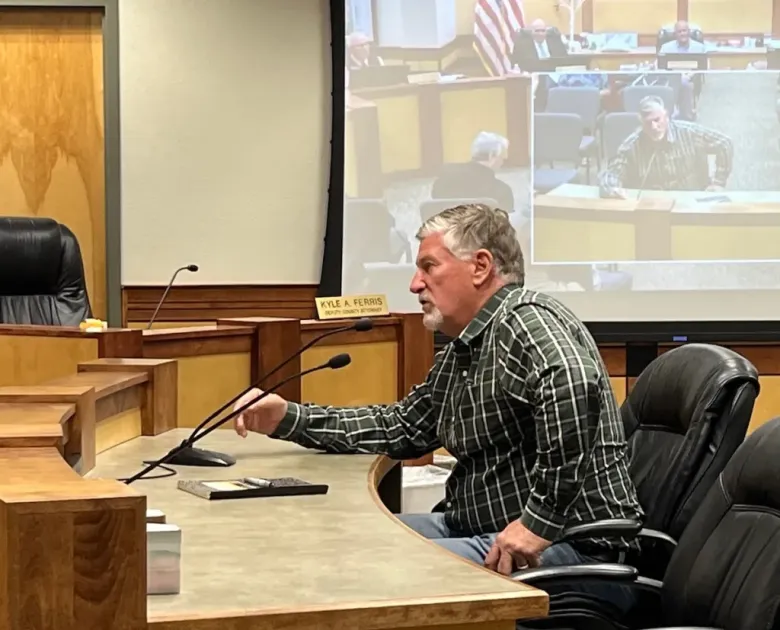
“The effects it’s going to have on this local community are going to be grave, and we need to fight,” Commission Chairman Del Shelstad said.
But the commissioners’ efforts to solicit testimonials garnered participation from only a handful of residents Tuesday — a disappointment for the body, even considering the shift-work nature of this blue-collar community and the 11 a.m. weekday timing of the hearing. Residents who spoke were outnumbered by other elected officials and reporters.
The coal industry — which includes 10 active mines in the county and directly employs more than 3,000 workers here — was a no-show.
Shelstad asked whether there were any coal producers or representatives of coal mining companies in the room. There were none, which elicited a frustrated response from Shelstad.
“I think that’s a darn shame that the coal producers aren’t here fighting — if for nothing else, for their employees,” he said. “They’re probably going to have a strategy that takes a little different approach, and I’m OK with that. But it’s really shameful that we can’t get them here to make public comment and to enter this fight with us.”
The public comment hearing was organized in response to what many regard as a historic move by the Biden administration to effectively set an expiration date for one of the nation’s largest sources of electrical power generation, as well as planet-warming greenhouse gas emissions: Powder River Basin coal.
The BLM on May 16 announced its preferred “no future coal leasing alternative” in a federal court-mandated update of its land use plans for the Buffalo, Wyoming and Miles City, Montana field offices that oversee coal leasing in the Powder River Basin, which spans portions of both states. Conservation groups had successfully argued the federal agency must fully consider the environmental, climate and human health implications of leasing federal coal in the region.
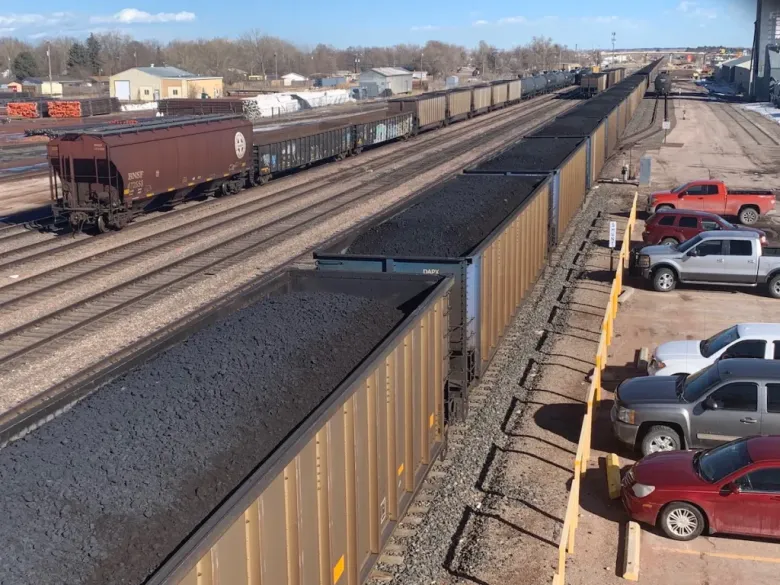
In its proposal to ban further federal coal leasing, the BLM estimated that existing leases will support the current rate of Powder River Basin coal production to 2041, according to the agency.
Cooperating agencies — such as local and state governments in the region — have until June 17 to file letters of intent to protest the BLM’s preferred no future leasing alternative. That gives those entities legal footing to challenge the decision. In addition to filing a protest letter, Campbell County commissioners are circulating an online petition urging the BLM to reconsider its preferred alternative.
“The coal industry employs thousands of workers across the country, and this ban will put many of these jobs at risk,” the petition states. “Additionally, coal is a vital source of baseload electricity for millions of Americans. Without a reliable supply of coal, our nation’s energy grid could become unstable.”
As of Wednesday morning, the county had collected 455 petition signatures, according to officials. Shelstad said he hopes to eventually collect at least 20,000 signatures.
Coal proponents in Wyoming say the BLM’s coal leasing ban is the latest in a series of Biden administration actions designed to kill the industry in favor of renewable energy sources and an effort to appeal to voters concerned about the global climate crisis.
The U.S. Environmental Protection Agency in April issued four “final” rules aimed at drastically cutting coal pollution, including a mandate that operators of existing coal-fired power plants commit to cutting or capturing 90% of the planet-warming carbon dioxide emissions by 2032 or convert the facilities to natural gas or close altogether.
Those coal-fueled power plants represent nearly the entirety of the Powder River Basin coal market today.
Energy market analysts, along with conservation groups, have suggested that the administration appears to be issuing rules and compliance deadlines that follow market trends already in motion, noting that many utilities are moving up coal plant retirement dates and that mining companies have not nominated a major new federal coal lease in the Powder River Basin since 2012.
Market trends have already cut production in the region by half since 2008, and the decline in demand for Wyoming coal appears to be accelerating — down by 20% so far this year. In fact, one of the region’s biggest coal producers, Arch Resources, has said it plans to sell or close its two coal mines in Campbell County: Coal Creek and Black Thunder.
Rep. John Bear (R-Gillette) and other local elected officials assured commissioners that they’re hearing pleas from their constituents to use every resource to fight the federal rules. If there is a lack of presence among coal companies themselves, Bear told WyoFile, it might be attributed to years of bad news and mounting pressures on the industry.
“The local [mining companies], most of those boards are located in St. Louis [Missouri] and they’re not interested in fighting this fight the way we’re going to have to fight it as government entities,” Bear said.

Wyoming Mining Association Executive Director Travis Deti, who could not attend the meeting, has said the mining companies rely on the association to speak on their behalf in the state, as well as other advocacy groups at the national level.
“As far as the Mining Association, which represents those companies, we’re fully engaged with our congressional delegation, with the governor’s office, with the Legislature, and we’re using every tool at our disposal to try to fight back on some of this stuff,” Deti told WyoFile by phone on Wednesday.
Some state and local officials are skeptical that the market has already spoken louder than the Biden administration. While some companies such as Arch Resources might not anticipate a future in Powder River Basin coal, others see an opportunity to apply carbon capture technologies and coal-to-products manufacturing — all of which is under threat by the BLM’s no future leasing proposal, according to Bear.
“Even if we’re forced to do it alone, other investors will see an opportunity,” Bear told WyoFile. “They have to see that somebody is fighting back right now.”
Bear said he worries that even some in Campbell County might not be aware of future opportunities for coal, or the dire consequences if the industry goes away completely.
“The rest of the country is going to be in trouble, too,” he said, adding that the rapid move to shut down coal plants presents an electric reliability issue. “Reliability is absolutely critical and that’s what this stuff provides.”
Though most coal miners and residents here squarely pin the blame for the coal industry’s decline on the Obama and Biden administrations, they’ve been burned by coal companies in the past.
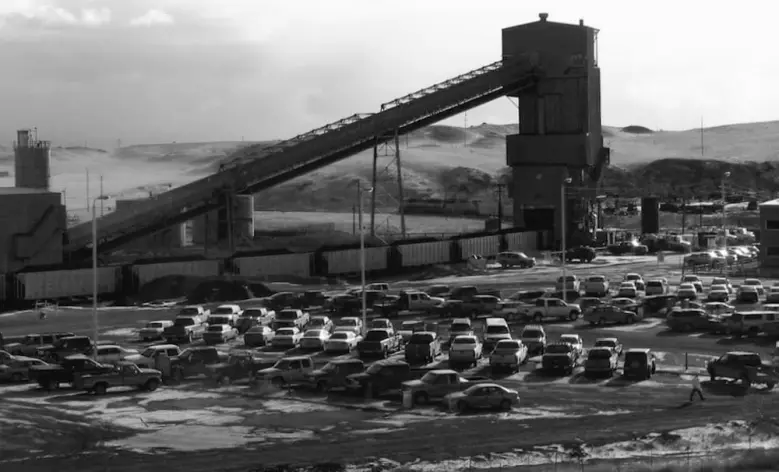
Most infamously, Blackjewel in July 2019 abruptly closed its Eagle Butte and Belle Ayr coal mines — among the nation’s largest — leaving some 600 miners in limbo about whether they could return to work or collect paychecks. The company furloughed many workers and eventually brought others back as both mines resumed operations. But the company’s unannounced mine closures and subsequent bankruptcy left coal miners as well as local businesses and governments fighting to get paid for wages and taxes owed.
Arch Resources (then Arch Coal) and Peabody Energy separately announced massive layoffs on the same day in March 2016, cutting jobs for some 500 miners. Both companies subsequently shed billions of dollars in debt in Chapter 11 bankruptcy reorganizations.
WIND: An energy and port services company says the state won’t consider their alternative offshore wind port plan, which they say would be cheaper and not have land use concerns like the state’s preferred site on Sears Island. (Portland Press Herald)
ALSO:
GAS: A Massachusetts firm wants to invest $100 million to build an anaerobic digestion facility in Pennsylvania’s Adams County to turn food waste into gas. (Fox 43)
SOLAR:
GRID:
TRANSPORTATION:
ELECTRIC VEHICLES:
BUILDINGS: A Maine firm will soon open a new assembly line process to manufacture 25 – 50 prefabricated homes that meet passive house standards every year. (Bangor Daily News)
WORKFORCE: Three Massachusetts schools will share a $3.4 million grant to provide clean energy job exposure and training to underserved students . (Mass Live)


.svg)
