

 Back
Back
PIPELINES: Federal pipeline regulators for the first time propose guidelines for pipelines transporting gaseous carbon dioxide, including a requirement that operators prepare first responders for emergencies. (Iowa Capital Dispatch)
ALSO: Public safety and agriculture concerns competed with economic development arguments as hundreds of people, mostly opponents, packed a South Dakota hearing on a CO2 pipeline permit. (South Dakota Searchlight)
SOLAR:
FOSSIL FUELS: Michigan House Republicans propose legislation to exempt 13 Upper Peninsula gas plants from the state’s clean energy law, claiming they’re needed for reliability. (WEMU)
CLIMATE: An Iowa Department of Education committee tasked with updating science standards says terms related to climate change were watered down from what they proposed before being released for public comment. (Cedar Rapids Gazette)
NUCLEAR: Federal regulators express concerns over a plant owner’s “very, very demanding” schedule to reopen its shuttered Michigan nuclear plant by this fall. (Michigan Public)
BIOGAS: Iowa regulators fine a dairy farm $20,000 for starting construction without a permit on portions of a manure digester system that would produce biogas from methane. (Cedar Rapids Gazette)
WIND: Utility officials say a planned 112-turbine wind project in North Dakota would provide a $100 million boost to the local economy. (Grand Forks Herald)
RENEWABLES: Michigan rules shifting authority over wind and solar projects to state regulators will remain in effect as dozens of local governments challenge the new law, a state appeals court rules. (MLive, subscription)
GRID:
COMMENTARY:
INDUSTRY: Low-carbon solar components, zinc batteries, and refurbished, cleaner diesel engines are among the products coming out of southwestern Pennsylvania as the region experiences a manufacturing resurgence driven by federal stimulus money. (WESA)
OFFSHORE WIND: Federal regulators announce the start of the environmental review process for a new offshore wind development, less than a week before President-elect Trump takes office. (Maritime Executive)
CLIMATE:
TRANSMISSION: A proposed transmission line in Maryland may be widely opposed, but is necessary to avoid rolling blackouts that could be a possibility as soon as 2027, experts say. (Baltimore Banner)
SOLAR: Vermont plans, in late 2025, to launch a $62 million program to provide solar power to low-income households using funds from the federal Solar for All program. (Burlington Free Press)
NATURAL GAS: Developers and real estate interests file a lawsuit challenging a Maryland regulation aimed at phasing out the use of natural gas appliances in large buildings. (Baltimore Banner)
NUCLEAR: Constellation Energy has New York Gov. Kathy Hochul’s support as it applies for federal funding to assess the potential for building a small modular reactor in the state. (Syracuse.com)
ELECTRIC VEHICLES: A Maine town plans to put four electric school buses on the road this month, working with a different supplier than the company that provided problem-plagued buses to other Maine districts. (Portland Press Herald, subscription)
GRID: Grid operator PJM proposes changes making it easier to take advantage of underused interconnection capacity, potentially unlocking as much as 26 GW of new capacity, supporters say. (Utility Dive)
TRANSPORTATION: As New York and New Jersey start to assess the impact of congestion pricing in Manhattan, London’s experience with a similar program suggests the controversy will subside but the traffic might return. (NJ Spotlight News)
AFFORDABILITY: A Maine legislative committee approves Gov. Janet Mills’ nominee for the role of public advocate for utility ratepayers, who says she will “zealously represent” the interests of low-income residents. (Maine Morning Star)
COAL: Despite touting investments in renewable energy, Warren Buffett’s Berkshire Hathaway owns 12 of the dirtiest coal plants in the country, including in Nebraska and Iowa, an analysis of federal emissions data finds. (Reuters)
CLEAN ENERGY:
PIPELINES: The Michigan Court of Appeals hears arguments from tribes and environmental groups challenging a state permit allowing Enbridge to build a tunnel for Line 5 in the Straits of Mackinac. (Michigan Advance)
CLIMATE:
SOLAR:
GRID:
POLITICS: Former Illinois House Speaker Michael Madigan concludes 12 hours of testimony over four days in his corruption trial that addressed quid-pro-quo allegations involving jobs with associates at ComEd. (Chicago Sun-Times)
BIOFUELS: Some Iowa biodiesel plants have at least temporarily shut down after the Biden administration failed to finalize guidance on a new tax incentives program. (Des Moines Register)
TRANSPORTATION: California abandons regulations aimed at phasing out diesel trucks and requiring cleaner locomotives, saying the incoming Trump administration is unlikely to issue waivers allowing the rules’ implementation. (CalMatters)
ALSO:
PUBLIC LAND:
NUCLEAR: Wyoming regulators greenlight construction of non-nuclear portions of TerraPower’s proposed advanced reactor facility in the southwestern part of the state. (WyoFile)
CLIMATE:
UTILITIES:
GRID: Federal data show utility equipment has sparked more than 3,600 California wildfires since 1992, but the cause of the deadly Los Angeles blazes remains under investigation. (New York Times)
OIL & GAS: Colorado advocates push back on proposed natural gas and produced water pipelines on federal land in the western part of the state. (Post-Independent)
SOLAR: Washington state officials say a 2017 law aimed at encouraging solar panel recycling has yet to be enforced and has driven some manufacturers from doing business in the state. (Seattle Times)
HYDROGEN: A report finds California lost a net total of three light-duty hydrogen fueling stations last year, casting doubt on the state’s ability to meet targets. (RTO Insider, subscription)
OVERSIGHT: A Utah city considers revising its land-use code to encourage solar, energy storage, natural gas and small modular nuclear reactor development. (Deseret News)
POLITICS: Montana Gov. Greg Gianforte announces a new task force aimed at developing ways to “unleash” energy development and production. (Montana Free Press)
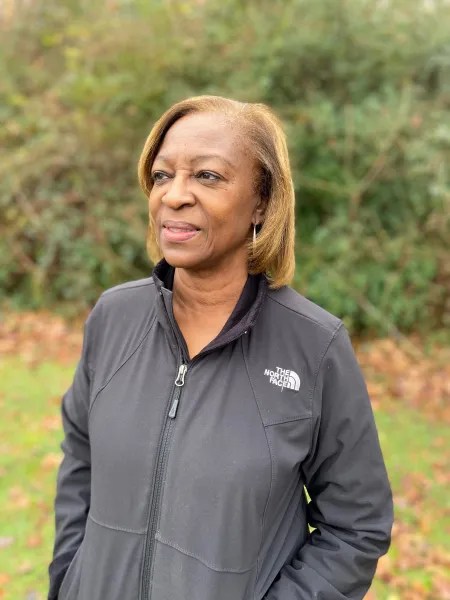
Jane Thornton tried and failed to stop the wood pellet plant from being built within earshot of her home in Faison, a tiny farming town in eastern North Carolina where she’s lived for over 60 years.
Now, some eight years later, she and her neighbors have a smaller but critical aim: getting the facility to better control its dust and the nuisance it creates.
Silver-haired and soft-spoken, Thornton is quick to wax philosophical about the forces that have fueled the pellet industry’s rise, largely driven by a decades-old carbon accounting loophole that countries use to allege climate progress. The unintended consequences are concentrated in the U.S. Southeast, which has emerged as a hub for the industry.
“It’s not green,” she said, referring to industry claims of sustainability. “Because when you cut the trees down, you lose the effect of them taking the bad stuff [out of the air]. And then we send them to Europe and use a lot of diesel fuel, which is not good. And they burn it and pollute their air. So how do they think it’s green?”
A host of advocates, scientists, and data backs up Thornton. Producing pellets, shipping them to Europe and Asia, and burning them in power plants all creates carbon pollution greater than that of burning coal. Too often, pellets are made from whole, hardwood trees that were absorbing carbon dioxide while they were alive. Their replacements, often pines, can’t regrow in time to make up for it.
As global climate negotiators debate the fuel’s carbon cycle, today Thornton and others in Faison are focused on dust. Indeed, neighbors of five wood pellet mills in the Southeast, including two operated by Enviva Biomass in North Carolina, list dust as their top concern, according to research conducted by the Southern Environmental Law Center and several other groups.
“That is the number one thing I have heard from almost every community I’ve talked to about pellet mills. It’s incessant dust,” said Heather Hillaker, senior attorney at the law center.
“We’re up against limited regulatory opportunities,” she acknowledged. But the state could force Enviva to tamp down the problem. “This is one area where there is a regulation that applies to an issue that is very prevalent for the community.”
At her home last month, Thornton described watching suppliers roll past on their way to Enviva’s factory.
“I’ve seen more log trucks come by today,” Thornton said. “They clear-cut everything. You get the oaks and the maples and the sycamores and whatever else is out there, and then you come back and plant pines. So, we’re going to have pine forests – or pine plantations.”
She added, “They’re not forests, because a forest is whatever the Lord puts out there.”
The practice of burning pellets for power isn’t economical without massive government supports, which don’t exist in North Carolina or elsewhere in the U.S.. What’s more, the Biden administration’s new rules for the Clean Electricity Tax Credit make it extremely unlikely that wood pellets could qualify.
Still, many countries count burning wood pellets as a positive on their climate ledgers, and the United Kingdom heavily subsidizes the fuel source. While those incentives are set to expire in 2027, the industry is campaigning heavily to get them renewed.
Often overlooked in the climate accounting debate is the experience of the disproportionately low-income communities of color in the Southeast, where pellet mills are invariably located. From the get-go, neighbors have sought to alleviate dust and noise from the mills.
Enviva’s first facility in North Carolina, in Ahoskie in Hertford County, began operating in 2011, and regulators required the company to control its dust soon thereafter.
“That pellet mill is a right smack dab in the middle of town,” said Hillaker. “So, it makes sense that they would have had some pretty significant dust issues immediately.”
Success in other communities has been more elusive.
A former professor at the University of Mt. Olive, Dr. Ruby Bell is an organizer with the nonprofit Dogwood Alliance in Faison. She lives far enough from the Sampson County mill that she doesn’t notice many impacts at her own home. Not so when she’s closer to the facility.
“When I first started this position,” Bell said, “I decided to go visit the people who live across the way. I sat outside for 20 minutes… When I left, I was sniffing. My nose was running. I had mucus beginning to form in my throat.”
Tiny air particulates invisible to the human eye are thought to be the most insidious to human health because they can burrow deep into the lungs and bloodstream. But large dust particles can cause the issues Bell described, because they tend to get trapped in the upper respiratory tract.
They can also exacerbate symptoms in people with pre-existing respiratory conditions. More than 100 households in the 300-person survey by Dogwood, Southern Environmental Law Center, and others, reported having asthma. Over half said they simply avoided outdoor activities like grilling and gardening to avoid the dust.
That’s part of why organizers want state regulators to require dust management plans at Enviva’s mills in Northampton, Richmond, and Sampson counties – not just the one in Ahoskie.
To be sure, the plan wouldn’t address every concern with the Faison facility. Neighbors complain about the noise from the mill’s 24-7 operations. They also blanch at the constant truck traffic, from the delivery of downed trees to the mill to the transport of the finished pellets some 80 miles south to the Port of Wilmington.
“This road out here was built as one of those farm-to-market roads,” Thornton said during the visit at her home, surrounded by farmland. “It wasn’t built for trucks, and they’ve torn it up I don’t know how many times.”
Activists are pressing Enviva to address all of their complaints voluntarily, saying that in addition to controlling its dust, the company should adopt best practices for incoming and outgoing trucks and cease operations between 10 at night and seven in the morning.
Yet even without these extra steps, the dust plan would make a measurable difference, community members believe. The Ahoskie plan, for instance, requires Enviva to apply water to “minimize fugitive dust emissions from any ground surfaces” when dust is observed or conditions are dry, among other measures. It also calls for grass berms, which could mitigate noise.
“The plan is better than nothing,” said Hillaker. “There’s better ability for [the state] to act if the plan itself is violated.”
But convincing North Carolina regulators to mandate the dust plans has been a slog. State rules say a plan is required if regulators can verify two dust complaints in a 12-month period. But that substantiation is far from simple.
“Trained Division of Air Quality inspectors visit the site and determine whether off-site dust is present,” Shawn Taylor, a division spokesperson, said over email. “If so, they attempt to determine the source of the dust by physically inspecting the dust, reviewing weather and wind data, reviewing operating schedules and air quality records of nearby facilities, and using other methods.”
Dating back two years, Bell has submitted grievances on behalf of neighbors in Faison that have yet to be confirmed. And while scientists from the University of North Carolina at Chapel Hill installed and collected air quality monitors at Thornton’s home and that of others, their research is ongoing and separate from the state’s process for verifying dust complaints.
“Fugitive wood dust usually consists of larger particles that are less likely to be detectable with these monitors, so physical inspection is used,” Taylor said. “Even if monitors detect dust, they cannot determine the source of the dust, so our investigation would need to rely on additional data to make this determination.”

Still, after years of little to no headway, organizers finally saw some progress last year. Regulators verified two complaints at the Enviva facility at the Port of Wilmington and will now require the company to enact a dust management plan.
“The details of that plan are still being developed by DAQ and Enviva,” Taylor said, “and will be implemented later this year.”
The success at the port has given a jolt of hope to organizers and pellet mill neighbors who feel they aren’t being heard.
“It’s hard to get them moving sometimes,” Bell said. With some justification, many in the community believe “it doesn’t matter what we say,” she said.
In Thornton’s eyes, the battle against wood pellets is all too typical of the way the country approaches environmental regulation.
“We’re not proactive to make sure what we’re doing is right,” she said. “We say ‘oh, this is new, this is good, we’re going to do a whole bunch of it,’ and after we get done, somebody comes along and says I don’t believe we should have done that.”
She added, “that’s true with a lot of things we’ve done in this country. Just because you can, doesn’t mean you ought to.”
Earlier this year, the Pew Research Center released a survey finding that support for expanding renewable energy had fallen dramatically among conservatives since Joe Biden defeated Donald Trump in the 2020 election:

Meanwhile, local opponents have been increasingly successful in fighting clean energy, sometimes with help from the fossil fuel industry as well as pervasive misinformation spreading through social media and other channels.
None of this bodes well for clean energy development in conservative, rural areas.
But in Minnesota’s southwest corner, in counties that Trump carried by 30 to 40 percentage points in the 2024 election, energy projects are still moving forward with minimal controversy, and local governments are reaping the benefits.
The secret, as ENN correspondent Frank Jossi reported last week, is collaboration. Since the 1990s, a coalition of counties now known as the Rural Minnesota Energy Board have been working together — creating consistent policy and providing accurate information locally, and lobbying at the state level to ensure they share in the profits.
The group is even credited for helping to get Republican former Gov. Tim Pawlenty to approve Minnesota’s 2008 renewable energy standard.
“The rural energy board has been a critical, important body and one of the major reasons why renewable energy has been successful in southwestern Minnesota,” Adam Sokolski, director of regulatory and legislative affairs at EDF Renewables North America, told Jossi. “Their policies have encouraged good decision-making over the years and led to a stable and productive region for energy development.”
Jossi also spoke with Chad Metz, a commissioner in Traverse County, which has a moratorium on wind and solar projects. Metz feels his county is missing out and wants it to join the rural energy board.
“The benefits [of clean energy] outweigh the negatives,” he said, “and it will just become part of life.”
🤝 A … different kind of collaboration: A Maryland county government is revealed to be behind an anti-wind website that appeared last month shortly before a Delaware county held a key vote rejecting an offshore wind substation. (Spotlight Delaware)
📈 Work to do: U.S. greenhouse gas emissions fell just 0.2% in 2024 as surging electricity demand spurred more natural gas generation, putting the country further off track from its climate goals. (New York Times)
💻 Land rush? President Biden issues an executive order allowing data centers to lease public land, on the condition their facilities are powered with new clean energy resources. (E&E News)
❤️ Another fan of the IRA: Republican U.S. House Speaker Mike Johnson quietly urged the EPA to award an environmental justice grant to a city in his district, just a week after President-elect Trump won the election and promised to undo the climate law behind the grant. (E&E News)
🚗 Wheels up: Analysts expect electric vehicle sales to jump 30% this year, even though the incoming Trump administration and its threat of tariffs and rolling back the EV tax credit and other incentives could slow the industry’s growth. (Associated Press)
⏱️ Photo(voltaic) finish: Solar customers and installers are rushing to complete projects before Trump’s inauguration, citing uncertainty about tariffs and federal incentives. (NPR)
GRID: An Ohio progressive watchdog group raises concerns about the proliferation of data centers in the state, including their potential to spike energy demand and prolong the use of fossil fuels. (Ohio Capital Journal)
ALSO: Utilities, renewable energy companies and ratepayer advocates say PJM’s proposal to require renewable and storage projects in the interconnection queue to participate in capacity market auctions was developed with inadequate input. (Utility Dive)
PIPELINES:
COAL: North Dakota officials threaten to sue the U.S. EPA for withholding action on the state’s application to regulate its own coal waste as a dispute continues over a waste management plan at the state’s largest coal plant. (Bismarck Tribune, subscription)
CLIMATE: Des Moines, Iowa, residents criticize city leaders’ decision to lay off the staff of the city’s sustainability office to help close a budget deficit, calling the move shortsighted. (KCCI)
ELECTRIC VEHICLES: The Michigan State Police deploys its first all-electric vehicle that will be used for providing security at state-owned buildings around the state capital. (WOOD-TV8)
OVERSIGHT: U.S. Senate lawmakers delay the interior secretary confirmation hearing of former North Dakota Gov. Doug Burgum for two days to give a government ethics office more time to review the nomination. (States Newsroom)
CLEAN ENERGY:
EFFICIENCY: Ameren Missouri starts offering $75 million in rebates and incentives for new customer energy efficiency and demand response programs. (Daily Energy Insider)
CLEAN ENERGY: President Biden issues an executive order allowing data centers to lease public land, on the condition their facilities are powered with new clean energy resources. (E&E News)
ALSO:
OVERSIGHT: Trump’s nominees for the EPA and Interior and Energy departments are expected to face tough questioning from Democratic senators during confirmation hearings this week. (E&E News)
FOSSIL FUELS:
COAL: Federal regulators propose permitting Montana’s largest coal mine to expand and increase production by about 19 million tons. (Montana Free Press)
GRID: Utilities, renewable energy companies and ratepayer advocates say PJM’s proposal to require renewable and storage projects in the interconnection queue to participate in capacity market auctions was developed with inadequate input. (Utility Dive)
SOLAR: Solar customers and installers are rushing to complete projects before President-elect Trump’s inauguration, citing uncertainty about tariffs and federal incentives. (NPR)
OFFSHORE WIND: A Maryland county government is revealed to be behind an anti-wind website that appeared last month shortly before a Delaware county held a key vote rejecting an offshore wind substation. (Spotlight Delaware)
BUILDINGS:
ELECTRIC VEHICLES: The Michigan State Police deploys its first all-electric vehicle that will be used for providing security at state-owned buildings around the state capital. (WOOD-TV8)
CLIMATE: The U.S. Supreme Court rejects an oil and gas industry bid to block Honolulu’s lawsuit accusing fossil fuel companies of covering up climate change’s effects and clearing the way for other states’ similar challenges to proceed. (ArsTechnica, Los Angeles Times)
ALSO: California Gov. Gavin Newsom calls on lawmakers to extend the state’s carbon cap-and-trade program beyond its 2030 expiration, saying it’s needed to reach climate goals. (RTO Insider, subscription)
HYDROGEN: The Biden administration awards a northern New Mexico rural electric cooperative $231 million to produce green hydrogen fuel using solar power and a defunct mine’s wastewater. (Albuquerque Journal)
UTILITIES:
GRID:
SOLAR: Nevada residents criticize a utility-scale solar developer for bulldozing Joshua trees to clear the way for a 185 MW facility. (KLAS)
ELECTRIC VEHICLES: The Biden administration awards California $55.9 million to install electric vehicle fast-chargers and a hydrogen fueling station for medium- and heavy-duty trucks. (RTO Insider, subscription)
PUBLIC LANDS: The U.S. Supreme Court refuses to hear Utah’s lawsuit seeking to gain control of “unappropriated” federal lands within its boundaries and loosen restrictions on oil and gas and coal development. (WyoFile)
COAL:
ELECTRIFICATION: California environmental justice advocates look to expand low-income residents’ access to building decarbonization and home electrification. (Inside Climate News)
WIND:
COMMENTARY: A Colorado columnist calls on state regulators to stand up to industry and adopt stringent regulations to rein in ozone pollution, which has exceeded federal standards for years. (Colorado Newsline)
This article was originally published by Spotlight Delaware.
In early December, a new website appeared online urging Sussex County residents to contact their councilmembers and tell them to deny a permit required for a proposed offshore wind farm.
The website – StopOffshoreWind.com – materialized days before the Sussex County Council would vote on the permit, which would allow for construction of an electrical substation needed by US Wind Inc. to build its massive ocean-based power plant.
StopOffshoreWind.com included the names and contact information for Sussex County Council members, as well as an online message form that sat underneath the phrase, “Write a Letter to your Sussex County Councilmembers.”
“Tell the Sussex County Council to DENY this permit,” the website stated.
What it did not show were the names of the people or companies that had created and funded it.
Spotlight Delaware has since learned that the website was the creation of a coalition of Maryland wind farm opponents, funded and led by the government of Worcester County, Md.
Sitting just south of Sussex County along the Atlantic coastline and within Maryland’s Eastern Shore, Worcester County is home to Ocean City, Md., a summer beach hotspot that is the primary driver of the county’s tourism-centered economy.
And, many of the local business owners there believe the sight of wind turbines 15 miles offshore would make the beaches less attractive to tourists.
Zach Bankert, executive director of the Ocean City Development Corporation, said his group had led local opposition to offshore wind development in past years. But, with a staff of just two employees, he said the operation was too small to be effective, which is why the county’s Office of Tourism and Economic Development recently took it over.
“When the county came in and said, ‘Hey, you know, we might have some funds for this, we’d like to kind of take this over’ … It was a no-brainer for us,” he said.
US Wind Inc.’s proposal is to build a wind farm with more than 100 turbines off the Delmarva coastline – just south of the Delaware, Maryland state line. It would send electricity ashore in Delaware with cables buried near the mouth of the Indian River.
When announcing a federal approval in September, the Biden Administration said the wind farm could produce up to 2 gigawatts of electricity, enough to power about 700,000 homes.
But coastal opponents say that electricity comes at too high a price, claiming wind turbines will drive tourists away, damage coastal environments and devastate fisheries.
StopOffshoreWind.com also claims that the windfarm will allow “foreign investors” to collect federal subsidies – references to U.S. government incentives provided to wind energy projects, and to US Wind’s ownership.
In emailed responses to questions from Spotlight Delaware, Worcester County Tourism Director Melanie Pursel said the local government authorized up to $100,000 in public money to fund what she called a coalition of local offshore wind opponents.
According to county records, the money specifically is for a contract with a Washington, D.C.-area public relations firm called Bedrock Advocacy Communications.
Pursel also noted in her early January email that Ocean City’s municipal government intended to match the county’s contribution. Last week, the Ocean City Council approved during a regular meeting a measure to distribute up to $100,000 to an “offshore wind opposition public relations campaign.”
During the meeting, City Manager Terry McGean said the campaign would target state lawmakers in Maryland and “other issues” that may arise in Delaware.
Ocean City Mayor Richard “Rick” Meehan said Bedrock Advocacy had already done a “really good job,” noting his belief that the group “played a significant role” in the Delaware county’s denial of US Wind’s substation permit.
“We’re all in,” Meehan said about the $100,000 appropriation. “And I’d hate to miss an opportunity to really capitalize, which might be the right timing to really get our messaging out.”
US Wind is a subsidiary of Renexia SpA, an Italian energy infrastructure company. The American investment giant, Apollo Global Management, also owns a stake in the company.
In response to critics, US Wind spokeswoman Nancy Sopko said in an emailed statement that the opposition’s campaign is filled with “blatant misinformation designed to frighten people.”
Asked for details to support the claims, Sopko pointed to what she called doctored photos from a website called SaveOceanCity.org, which is run by Bankert’s Ocean City Development Corporation.
“The complete disregard for facts, accuracy, and settled science is irresponsible and dangerous,” Sopko said.
She also asserted that state leaders in Maryland and Delaware have been “full-throated” in their support for the wind project in a region that “needs more electricity to keep the lights on, grow the economy, and support local jobs.”
The opposition to the US Wind project is nominally being led by a political nonprofit, called Stop Offshore Wind Inc.
It was formed in Delaware on Dec. 5, around the time that StopOffshoreWind.com appeared. State business records show that Florida attorney Andrew L. Asher created the company.
Asher, a solo practitioner, previously served as general counsel for the BGR Group, a powerful lobbying firm in Washington, D.C. Its biggest clients in recent years include Qualcomm Inc. and the governments of Bahrain and India.
He continues to work for BGR Group in an “of counsel” capacity, according to his website. Asher did not respond to requests for comment. Pursel said Asher’s role in Stop Offshore Wind was limited to the creation of the entity, describing it as strictly administrative.
She further said that while “several county staff members” are working with the nonprofit, the entity “is not controlled” by Worcester County.
“Stop Offshore Wind Inc. is a 501(c)4 organization formed by a coalition of concerned citizens, community-based organizations, business organizations and local governments to raise awareness about the potential negative impacts of the US Wind proposed project,” said Pursel, who also calls herself a spokeswoman for the Stop Offshore Wind Coalition.
As a 501(c)4, Stop Offshore Wind Inc. is not required to disclose its donors.
Pursel said it had raised $11,000 from private donors as of late December, with much of the money donated during a Dec. 4 fundraiser.
A flyer for the fundraiser, which charged $150 a head, said the money raised would pay for “a bold, multi-channel media blitz” opposing industrial wind farms in Ocean City.
Prior to the Sussex County vote, Stop Offshore Wind did not list any governmental funding ties. Following inquiries from Spotlight Delaware, the website now has an “about us” page that lists its affiliation with Ocean City and Worcester County.
On Dec. 17, days after StopOffshoreWind.com appeared, the Sussex County Council voted to reject the windfarm’s substation building permit application.
The 4-to-1 vote in opposition came after the Sussex County Planning and Zoning Commission recommended that the county approve the permit. Three of the voting council members are leaving office in early 2025. Of those, two voted against the permit.
It is not clear if the StopOffshoreWind.com website influenced the council’s vote. Members of the county council would not comment on this story due to a pending appeal against the decision.
Still, the vote followed mounting public opposition in Sussex County to offshore wind. On the day of the vote, dozens of residents appeared at the county council meeting, with many asking to speak in opposition to the project.
The council did not allow comments, stating the public record had closed following a July meeting when they discussed, then tabled, the permit application.
Following the vote, US Wind CEO Jeff Grybowski said his company’s plan to build the offshore wind farm is “unchanged.”
“We know that the law is on our side and are confident that today’s decision will not stand,” Grybowski said.
On Dec. 26, US Wind’s subsidiary Renewable Development LLC appealed Sussex County’s permit denial through a petition asking a Delaware Superior Court judge to review the matter.
In the petition, the company’s attorneys called the council’s decision “irregular, arbitrary, capricious,” and “not supported by substantial evidence.”
On the heels of Sussex County’s rejection, Worcester County announced its own move to hinder US Wind’s plans: it would use eminent domain to buy two West Ocean City properties targeted as US Wind’s operations and maintenance facilities.
“If there ever was a worthy use of eminent domain, this is it,” Worcester County Chief Administrative Officer Weston Young said in a press release.
Also in the press release, Worcester County linked to two websites that it said provided more information “about efforts to protect Maryland’s Coast from ocean industrialization.” Those sites are StopOffshoreWind.com and SaveOceanCity.org. The latter represents the Ocean City Development Corporation’s opposition to offshore wind farms.
With a pending appeal and a Trump administration that opposes offshore wind, uncertainty looms over the US Wind project – as well as other wind farms proposed for the Delmarva peninsula.
According to the U.S. Department of the Interior’s Bureau of Ocean Energy Management, Danish wind farm developer Ørsted intends to build up to 72 wind turbines 16 miles off the coast of Rehoboth Beach.
In early June, the company submitted its plans to the federal government, and they currently are under review.
This month, then-Delaware Gov. John Carney and the Department of Natural Resources and Environmental Control announced a 25-year agreement with US Wind. As part of the agreement, US Wind must give Delaware utilities $76 million worth of renewable energy credits throughout the life of the project to help the state meet its renewable energy goals.
Through the agreement, US Wind also commits to investing $200 million to upgrade Delaware’s electricity wires and other transmission infrastructure.
In a press statement touting the agreement, state officials claim that energy from the US Wind offshore site will produce enough power to lower electric rates in Delaware by $253 million over 20 years.
“We are ready to reap the environmental, health, workforce, energy cost and community benefits from this needed transition to renewable energy,” Carney said in the statement.


.svg)
