

 Back
Back
The package of geothermal permitting reforms comes as Republicans and Democrats alike look to boost clean, 24/7 power supplies. Now it heads to the Senate.
The U.S. House just approved a bipartisan package of bills to accelerate geothermal energy as the nation clamors for more around-the-clock clean electricity.
The Geothermal Energy Advancement Act, or H.R. 5631, passed with broad support on Tuesday. The legislation — led by U.S. Reps. Jeff Hurd (R-Colo.) and Susie Lee (D-Nev.) — includes the text of six bills that tackle some of the key permitting and regulatory challenges that companies face when building and scaling geothermal systems.
The measures “seem like low-hanging fruit, but they can actually make a tangible difference as we try and develop projects,” Ben Brenner, who leads federal policy and outreach for the geothermal startup Zanskar, told Canary Media. “It’s a huge milestone for these bills to pass the House.”
Also on Tuesday, the House separately passed another geothermal bill — sponsored by Rep. Russ Fulcher (R-Idaho) — that aims to increase the frequency and consistency of geothermal lease sales on federal land.
America has been converting earth’s heat into electricity for nearly 70 years, beginning with The Geysers power plant in Northern California. Yet the carbon-free energy source still accounts for only 0.4% of the nation’s annual electricity generation, largely owing to geographical constraints.
A new generation of technologies has made it possible to extract heat from places without simmering hot springs and natural reservoirs. The startup Fervo Energy, which just went public, uses drilling techniques from the oil and gas industry to produce clean power from hot dry rocks. Zanskar combines artificial intelligence with boots-on-the-ground surveying to identify conventional but hidden heat resources in the U.S. West.
But so far, the federal government hasn’t adapted to meet the rising demand from developers for permits, land leases, and legal certainty, experts say. Over 90% of identified U.S. geothermal resources are beneath public lands, making the Department of the Interior a crucial player in the emerging industry’s growth.
“As technologies evolve, so must the regulatory landscape,” Terra Rogers, senior director of the Clean Air Task Force’s superhot rock geothermal program, said in a statement. She applauded Congress for taking practical steps toward “unlocking next-generation geothermal.”
Now, the geothermal bills head to the Senate, though it’s unclear when or how the chamber will act, E&E reported. However, Brenner said he sees “a real pathway toward Senate passage, whether as standalone legislation or as part of a broader permitting package.”
Originally, Hurd introduced H.R. 5631 to improve Interior’s own expertise on geothermal issues, including by creating the role of “ombudsman” — a point person within the Bureau of Land Management who can clear up confusion and resolve disagreements among field offices about geothermal permitting decisions.
The amended bill that passed this week also folds in five other measures:
Rep. Alexandria Ocasio-Cortez (D-N.Y.), who sponsored H.R. 398, said that speeding up geothermal deployment could help alleviate the nation’s skyrocketing electric bills. “At a time of extreme political polarization, this package shows that Congress can still come together on commonsense solutions to better the lives of the American people,” she said in a press release.
The measures will also likely benefit the developers of power-hungry data centers, such as Google and Meta, which are investing in geothermal projects to support their growing operations in Nevada and New Mexico, respectively. Both firms are members of the Corporate Energy Buyers Association, a trade group that advocates for a carbon-free energy system.
“There are few energy technologies that draw this level of bipartisan support, but geothermal energy is a reliable domestic resource with enormous potential to fuel our nation’s electricity needs,” Rich Powell, CEO of the association, said in a statement.
Geothermal’s ability to churn out power 24/7 appeals to both Republicans and Democrats grappling with energy-supply crunches in their states, though wind and solar paired with batteries can also deliver firm power in certain ideal locations. Late last month, a bipartisan group of governors from Arizona, Colorado, New Mexico, and Utah launched a coalition to ease financial and logistical hurdles that stand in the way of building potentially hundreds of gigawatts of geothermal capacity in the Mountain West.
Geothermal’s strong overlap with the oil and gas industry — in terms of tools, workforce, and investors — is another key reason why the Trump administration has shown support for the renewable energy source, even as it works to block wind and solar development.
Beyond the House bills, Brenner noted that other, bolder policy measures are needed to dramatically increase the scale and pace of next-generation geothermal deployment in the U.S. That could include increasing federal funding for research and exploration — efforts that are largely backed by equity and venture capital today — as well as for demonstration projects that help de-risk geothermal development in new areas.
“This is an incredibly positive step, but it is not the full picture,” he said of the legislation. “There’s a lot more work that has to happen.”
An update was made on June 3, 2026, to include Rep. Russ Fulcher’s legislation.
A bill in Massachusetts would create a framework for a geothermal utility, with the aim of heating and cooling buildings cleanly and affordably.
When a neighborhood-scale geothermal network came online in Framingham, Massachusetts, two years ago, it was hailed as groundbreaking.
The first-of-its-kind system, owned by the state’s largest utility, Eversource, delivers warm and cool air to some 140 customers through pipes much like the ones that used to carry natural gas to those homes and businesses. But instead of burning fossil fuels to generate warmth, the network draws on emissions-free thermal energy stored in the ground beneath the community. To deliver cool air, the system returns the heat back into the earth.
Supporters say this approach to climate-friendly heating and cooling — geothermal loops, serving entire neighborhoods, owned and operated by utilities — can deliver clean heat, save consumers money, and provide new business opportunities for natural gas companies in states trying to transition away from fossil fuels.
The idea has advanced in Massachusetts largely through the efforts of clean-heat nonprofit Home Energy Efficiency Team, or HEET, and supportive lawmakers and regulators. The country’s first law enabling these systems was passed in the state in 2021, and the Framingham pilot is the only such network currently up and running in the U.S. Construction is slated to begin on a second network in Massachusetts this summer.
However, as more states look for ways to transition away from natural gas for economic and environmental reasons, the idea is catching on fast: Today, 13 states have laws promoting thermal networks, and 11 utility companies nationwide are developing about 30 projects, according to a crowdsourced map created by the Building Decarbonization Coalition. New York and Colorado, especially, are instituting new laws and mandates to encourage the formation of pilot projects.
With momentum building, HEET and its allies contend that this new form of energy delivery requires a structural rethink. Lawmakers and regulators are currently considering a pair of measures that lay out guidelines for who owns the thermal energy beneath our feet, and how consumers should pay for it.
These proposals aim to seize this moment, when the rules of thermal energy delivery are not yet established, to write a playbook that prioritizes affordable service for consumers and good jobs for utility workers over corporate profits. In the face of volatile and rising natural gas prices, it is a chance to change fundamental assumptions about who should receive the benefits of an energy resource, said Zeyneb Magavi, executive director of HEET.
“This is the beginning of the creation of a new business model,” she said. “It’s a once-in-many-lifetimes opportunity to get to reimagine and redesign the energy system.”
In March, the state legislature’s Joint Committee on Telecommunications, Utilities, and Energy advanced a bill, sponsored by Rep. Steve Owens (D) and largely authored by HEET, that would establish the existence of a thermal commons. The “commons” is an economics concept that refers to resources that are shared among a community with no exclusive private ownership. Think sheep grazing on the town green in days of yore.
The bill would also create a commission that would hone that definition and answer key questions: Who can access the thermal energy under public lands? Are there places where drilling should be prohibited? Do a private landowner’s thermal rights extend to the edge of their property? The panel would, essentially, come up with a set of rules to make sure everyone knows whose geothermal sheep can graze where.
“This can be the basis for future legal thinking,” Magavi said.
Meanwhile Eversource, has proposed a new framework for setting rates for geothermal service, now awaiting approval from utility regulators.
Most utility rates are volumetric — that is, the more you use, the more you pay. But Eversource wants customers to instead pay a flat monthly fee based on the capacity of their heat pumps. A home with a three-ton heat pump, for example, would pay a fixed charge of $10 per month, plus another $14.95 per ton of capacity, for a monthly total of $54.85.
Running the heat or air conditioning more would still increase a customer’s electricity bill — heat pumps run on electricity — but the cost of the warm or cool air itself would remain stable regardless of usage. This model works because customers aren’t paying any fuel costs for the thermal energy being drawn from the ground, so heating more won’t mean more expense for the forthcoming geothermal utilities.
This is the first time state utility regulators have been asked to consider a rate structure for an entirely new utility service in maybe 120 years, said Eric Bosworth, who oversaw the development of the Framingham pilot in his former position at Eversource.
“It’s great for rate transparency,” he added. “It makes the energy calculation on what bills will be very straightforward.”
But before these systemic changes can take root, more thermal networks need to come online to demonstrate the potential widely, Bosworth said.
“We need more people putting more pipe into the ground, because that’s when it becomes visible and it becomes real,” he said.
To that end, HEET is dedicated to learning everything it can from each new project, to analyze how effective the networks are and to find ways to improve them. It founded the research initiative Learning From the Ground Up to collect data from the earliest projects. In Framingham, the organization threaded 14 of the 88 boreholes with fiber optic sensors that collect temperature data from the thermal exchanger in order to confirm and better understand the efficiency of the system.
Building public awareness and support will also be vital for widespread adoption. There needs to be thoughtful education and outreach to convince people that thermal systems can be as good as or better than what they’re used to, said Kristin George Bagdanov, associate director of research at the Building Decarbonization Coalition and the author of the newsletter “Cheaper Heat.” Some people might be worried about the consequences of a power outage, or concerned about cooking without a gas stove, she said. Some utilities promoting pilot projects have encountered residents who were sure that the whole thing must be a scam, because it promises so much, said Nicole Abene, the Building Decarbonization Coalition’s associate director for New York.
So far, thermal networks have had bipartisan appeal. The Trump administration retained tax credits for geothermal energy when it gutted incentives for other types of renewable energy, and Republican lawmakers have been supportive of the systems in many states. HEET has worked hard to keep the conversation focused on affordability, jobs, and energy independence, rather than solely on the environmental benefits.
“We have to actually stick to the inclusive language and narrative we’ve been using,” Magavi said. “The minute we have some of the powers that be step in and use partisan language we’re risking the whole system.”
An update was made on May 28, 2026, to include the name of Rep. Steve Owens, who sponsored the bill advanced by Massachusetts’ Joint Committee on Telecommunications, Utilities, and Energy.
Denver’s largest source of emissions is its buildings, which tend to run on fossil fuels. The city is turning to a surprising solution to kick the habit.
This story was originally published by Colorado Public Radio. Sign up for CPR’s weekly climate newsletter.
DENVER — Like in many American cities, Denver’s largest source of climate pollution is its buildings. Powering, heating, and cooling the city’s skyscrapers takes a lot of fossil fuels.
Now, the city is trying a greener solution. It plans to heat and cool a cluster of large downtown buildings using a combination of water, the heat of the Earth — and sewage.
The Cherokee Boiler House, near downtown Denver, sits at the center of this plan. Despite the mothballed plant’s handsome brick exterior, inside it’s filled with rattling pipes, hazard signs, and cockroach carcasses.
“It looks like a good place for a rave or potentially a horror movie,” says Denver Mayor Mike Johnston.
But the city sees potential in this relic. City officials think it could play a starring role in Denver’s goal to reduce greenhouse gas emissions to zero by 2040 — and save taxpayer dollars in the process.
“We think we are standing in what can be the future of energy in Denver, which is both pollution free and affordable,” Johnston says.
Denver will pilot what’s called a thermal energy network. Similar networks already exist on campuses and in some cities around the world. If it works here, it could set an example for how to decarbonize a dense, downtown core in the United States.
More than a hundred buildings in downtown Denver are currently heated by the world’s oldest continuously operating commercial steam system, which requires burning natural gas, a fossil fuel.
When the steam network was first built in the late 1800s, newspapers heralded it as a marvel. But today, it’s leaky and inefficient.
Customers’ steam bills have more than doubled in the past decade, according to the city’s climate office, because of increased maintenance costs, fossil fuel prices, and a steady drip of customers quitting the system.
A 2021 city ordinance requires large buildings in Denver to cut their greenhouse gas emissions or potentially face penalties in a few years. But meeting those targets may be impossible for customers that are stuck on the aging steam system, according to the city.
So over the next decade, the city plans to repurpose parts of its old systems to create a new heating and cooling network for 11 city-owned buildings, which it calls an “ambient loop.”
The network will heat and cool buildings using underground pipes filled with water. That water circulates among buildings like a lazy river, linking them together on a loop (it’s “ambient” because of the relatively tepid water temperature).
Each building is then outfitted with water-source heat pumps. These are superefficient appliances that can transfer energy from the circulating water to either heat or cool the building.
“Basically, heat pumps can move heat wherever you need it,” says Elizabeth Babcock, the head of Denver’s Office of Climate Action, Sustainability and Resiliency.
When a building is too hot, heat pumps suck heat from the interior air and dump it into the circulating water. When a building is too cold, the pumps can suck heat from the water to raise the temperature inside.
Crucially, because buildings are linked together on a loop, they can share energy. If the art museum is overheated, for instance, the heat pump will dump its excess heat into the water. That water then flows to a nearby municipal building, where another heat pump can draw on that extra heat to warm up.
Eventually, the Cherokee Boiler House will be a central hub to manage the loop — the “brains and brawn” of the system, according to Drew Halpern, with the city’s climate office.
The city estimates it will cost roughly $280 million to $320 million to build out the network over the next decade, though it says those costs may fall. The pilot is being funded by a combination of city dollars and a state grant. Eventually, the city may have to issue bonds or seek private investment for more funding.
Even with the high up-front cost, the loop is up to 75% cheaper than other ways of decarbonizing those buildings, according to a 2025 feasibility report, and will be cheaper and greener than staying on steam.
The city plans to start with just a handful of buildings. As more buildings join, the loop will need more energy to keep the water at the right temperature. So the city thinks it can tap into a nearly limitless source of clean energy — the heat of the Earth.
Beneath downtown parking lots, the city plans to drill hundreds of geothermal boreholes, which will tap energy from more than 1,000 feet underground.
These will act as a battery of sorts for the network. Pipes filled with water will dive down into the holes, where they will exchange energy with the Earth. Then, those pipes will continue to buildings on the loop.
Geothermal heat is basically free once the system is constructed, though digging the boreholes can be a considerable expense.
But the city also hopes to tap into another unexpected source of “clean” energy: sewage.
Most people don’t think of sewage as a source of energy, says Dan Freedman, director of technology and innovation at Metro Water Recovery, the city’s wastewater utility.
But taking showers, doing laundry and, yes, going to the bathroom generate warm wastewater brimming with thermal energy — which becomes heat.
Freedman admits it’s not the system’s most exciting selling point.
“If we’re being honest, geothermal just sounds sexier than wastewater thermal,” Freedman said during a tour of Metro’s treatment facility in Denver.
Currently, Denver’s wastewater is treated and dumped into the South Platte River while it’s still warm. That isn’t great for the river’s health, and in several years, to comply with state environmental regulations, Metro will have to cool it down.
It’s a lot of heat. In certain weather, the wastewater can contain about four times the heat used by buildings on the current steam system during the dead of winter, according to Freedman.
The city hopes to siphon off some of that heat for the loop, using a technology called a heat exchanger placed directly inside a major sewage line.
That would save the utility from paying more to chill its wastewater and burning more energy in the process. It could also open up a new source of revenue.
America’s largest “sewer heat recovery” system is just down the road, at a massive complex in Denver. Implementing the technology at city scale, though, could usher in much more widespread adoption.
“If successful, I’m incredibly confident that it’s just gonna take off,” Freedman says.
Denver is starting small — in about two years, just two buildings and a sidewalk snowmelt system will pilot a micro version of the loop. By 2030, the city plans for nine buildings to be connected.
Mayor Johnston is bullish that if the pilot works, it can be adapted to thousands of natural gas customers near downtown, accelerating the city’s push to eliminate its emissions.
“If you can come to one of the most bustling, vibrant downtowns in the world and discover any one of those buildings is heated and cooled by water,” he says, “that is a breakthrough for the city and, I think, a breakthrough for the country.”
Edited by Rachel Waldholz
Arizona, Colorado, New Mexico, and Utah are joining forces to accelerate deployment of clean, around-the-clock geothermal energy in the region.
America’s ambitions to harness geothermal energy just keep getting bigger.
On Wednesday, a bipartisan group of Mountain West governors unveiled an initiative to unlock an estimated 200 gigawatts of clean, always-on energy by tapping into the region’s underground heat. That much power would represent a 50-fold increase in the nation’s current ability to generate geothermal electricity.
Arizona, Colorado, New Mexico, and Utah launched the Mountain West Geothermal Consortium a week after the geothermal startup Fervo Energy went public and its valuation rose to over $10 billion. Fervo alone estimates that it has the potential to develop over 42 GW in total geothermal capacity across the nearly 600,000 acres it’s leasing in Western states.
Geothermal energy is gaining traction on both sides of the aisle at a time when data centers, factories, and increasingly electrified cars and buildings are pushing the country’s power grids to the brink.
Yet Fervo and other geothermal firms have many hurdles to clear before they can turn those hypothetical gigawatts into real-world projects. By teaming up, the four states aim to ease some of the financial, permitting, and logistical challenges that stand in the way of widespread geothermal deployment.
“The idea that we can unleash clean, affordable, dispatchable power … that’s kind of the Holy Grail, what we’ve all been chasing. And yet it’s a reality now in ways that it’s never been before,” Utah Gov. Spencer Cox, a Republican, said during the Wednesday news conference.
Utah in particular has become a hot spot for developing the next generation of geothermal technologies, which promise to sidestep the limitations of conventional systems. Existing geothermal plants rely on naturally occurring reservoirs of hot water and steam to spin turbines that produce electricity. But new drilling techniques and tools are enabling companies to access heat in more places, and at greater depths, than was previously possible.
The federally backed Utah Forge project in Beaver County helped develop and test “enhanced geothermal systems,” which use horizontal drilling and fracking to create artificial reservoirs underground. Now, Fervo is commercializing the technology at a nearby site. The first phase of Fervo’s 500-megawatt Cape Station project will start sending power to the grid this fall.
“The Mountain West region has an opportunity to lead the world,” Cox said.
Utah is currently home to four conventional geothermal power plants totaling 88 MW in capacity. New Mexico has a single, 14-MW facility, while Arizona and Colorado don’t have any.
The new consortium is led by the Center for Public Enterprise, a New York–based think tank, and the nonprofit organization Constructive, with geothermal companies, investors, and potential customers serving as advisers to the states. The effort was inspired by CPE’s April 2025 report calling on policymakers to “deliberately build the legal, financial, and market infrastructures” to accelerate enhanced geothermal projects.
As part of the effort, the four participating states will work to coordinate their permitting processes to speed up approvals and have agreed to share data needed to find and build new geothermal plants. They will also work to improve regional grid interconnections for the projects and to create financing mechanisms that encourage both public and private investment.
Among the biggest barriers to scaling geothermal is what CPE has called “a vicious cycle” in project financing.
In order to get money to build projects, developers must first spend millions of dollars to drill exploration and test wells to prove their systems can produce sufficient amounts of energy over time, while also showing they can bring down drilling costs. “However, providing this evidence requires additional drilling and larger operational datasets, which require capital the sector does not possess,” CPE said in a separate 2025 report.
To break that bottleneck, states could work with the federal government to replicate projects like the Utah Forge site across the region and take on much of that risky, expensive early work, according to CPE. They could also provide short-term public loans and create prepayment structures that help boost the cash flow and creditworthiness of projects to attract private investors.
At this week’s launch event, Ben Serrurier, Fervo’s director of government affairs and policy, said his firm is excited to work with the states “on the financing solutions that can have us be drilling more wells in new places, bringing down costs faster … and finding where we can do projects we never thought projects were possible.”
Cox said a key goal of the Mountain West consortium will be to bring “some heft” to Washington, D.C., to advocate for federal funding and policies that support a geothermal expansion. Over 90% of identified U.S. geothermal resources are on federally managed lands, and federal permitting processes can be slow and cumbersome — though recent reforms by the Bureau of Land Management and bipartisan bills in Congress all aim to streamline permitting for geothermal projects.
“If it’s just one state going it alone, that’s great, but you don’t get the attention, the capital, the investment that you need,” Cox said.
Colorado Gov. Jared Polis, a Democrat, agreed. “The more that we can work to harmonize and de-risk investments in geothermal … we can really support geothermal nationally,” he said.
The much-anticipated stock market debut netted $1.9B for Fervo, indicating strong investor interest in the around-the-clock, carbon-free promise of geothermal.
Fervo Energy, a startup that has pioneered new ways to produce electricity from the earth’s heat, is officially a publicly traded company. It’s the first next-generation geothermal firm to go public.

Today’s initial public offering netted the Houston-based Fervo about $1.9 billion and valued it at roughly $7.7 billion. The company had reportedly sought a much lower valuation of between $2 billion and $3 billion in January but eventually raised its target amid strong investor interest. Fervo secured nearly $2 billion in financing over the course of its nine years as a private firm.
“We are seeing demand grow in a way that we have not seen in the electricity sector in quite a long time,” said Sarah Jewett, Fervo’s senior vice president of strategy. “To come onto the scene at a time when we’re seeing that inflection point of demand, with proven technology… it’s a really welcome time for a story like ours.”
The debut is a major moment for geothermal energy, which can deliver carbon-free power around the clock but has remained a marginal source of electricity worldwide given its serious geological limitations. Fervo makes geothermal energy viable in far more places by harnessing horizontal drilling techniques borrowed from the oil-and-gas industry, for which its CEO and co-founder, Tim Latimer, previously worked.
Fervo’s upsized IPO reflects investor exuberance for any company promising to help meet gargantuan power demand from AI data centers. Fervo has particularly tight ties with Google, which is both an investor in and a customer of the firm. Meta has signed deals with two other advanced geothermal startups in recent years.
“Fervo going public reflects growing confidence in the ability of new geothermal technology to serve soaring electricity demand across the country,” John Coequyt, director of U.S. government affairs at clean energy think tank RMI, said in an email.
Fervo joins longtime geothermal leader Ormat on the public market. Ormat, which completed its IPO in 2004, has been building traditional geothermal power plants in the U.S. and beyond for decades, and it recently began expanding its focus to include “enhanced geothermal systems” like Fervo’s. Ormat saw its stock price climb steadily for years and then nearly double over the last year and change.
Fervo’s IPO comes months ahead of another expected milestone for the startup: the commissioning of its first-of-a-kind power plant in Utah. The development, dubbed Cape Station, broke ground in 2023 and is on track to start sending electricity to the grid in late 2026. A total of 500 megawatts are under construction at the site, but Fervo has the permits in place to quadruple that amount.
Fervo also plans to bring a 115-MW development in Nevada online by 2030, as part of its power purchase agreement with Google and utility NV Energy.
The $1.9 billion Fervo has raised with its IPO will help the company acquire new land and fund general operations — but, Jewett said, “in reality the majority of that money is going to go to project development.”
“We are very, very focused on deploying megawatts — and of course now we say gigawatts,” she said. “The majority of our equity raised today will go to that.”
In its IPO filing, Fervo identified a total of 3.65 gigawatts of power plant capacity that is under construction, ready to be built, or in advanced stages of development. The U.S. currently has roughly 4 GW of installed geothermal capacity.
Fervo’s success will depend on its ability to drive down the cost of the power it produces.
Phase 1 of the Cape Station project is set to deliver power at $7,000 per kilowatt, a price that is competitive with traditional and next-generation nuclear power but far higher than that of natural gas or renewables. Phase 2 of Cape Station, which is also now underway, will deliver power at $5,500 per kW, Jewett said. The company aims to slash that rate to $3,000 per kW.
Fervo has shown some ability to cut costs to date. Between 2022 and 2025, Fervo says it has reduced drilling times by about 75% and slashed per-foot drilling costs by about 70%, marking a significant achievement for the nascent industry. Those trends will need to hold up as the company completes larger-scale installations in the years to come.
Fervo expects to run a loss for “several years,” per its IPO document, as it spends more aggressively to build out its power plants. Its net loss was roughly $57.8 million last year, up from $41.1 million the year prior.
Revenue was a scant $138,000 last year — but Fervo’s IPO document says there is a lot more waiting in the wings. To date, it has signed 658 megawatts’ worth of binding power purchase agreements with major utility Southern California Edison, community choice aggregators, and firms like Google and Shell. That adds up to “approximately $7.2 billion in potential revenue backlog,” per the filing.
It also has an agreement in place with Google, whereby Fervo will give the tech giant the right of first refusal to purchase 3 GW of electricity from certain new projects, though Google itself is under no obligation to say yes. Either party can terminate the deal if no binding commitments have been made by March 2028.
Geothermal energy enjoys more bipartisan support in the U.S. than any other renewable energy source.
While President Donald Trump’s One Big Beautiful Bill Act sunset federal tax credits for solar and wind this July, those for geothermal were left intact. The fracking firm founded and formerly led by Energy Secretary Chris Wright invested in Fervo in 2022. Not one but two bipartisan pro-geothermal bills are under consideration in Congress right now.
And although the Trump administration continues to obstruct wind and solar projects on federal lands, next month the Interior Department is slated to auction off an additional 197,000 acres of land in New Mexico for geothermal energy development.
Maria Gallucci contributed reporting to this piece.
An update was made on May 13, 2026, to include comments from Sarah Jewett, Fervo’s senior vice president of strategy.
Red and blue states alike are working to transform abandoned wells from costly, polluting liabilities into sources of clean power and heat.
As states seek out much-needed supplies of clean, reliable energy, some are looking to an unconventional source: abandoned oil and gas wells harnessed for geothermal heat.
Millions of inactive wells are littered across the United States, the relics of earlier eras of fossil fuel production. A large number of the sites have no official owner, and many are still polluting groundwater and leaking heat-trapping methane. The country has barely scratched the surface in dealing with this problem.
Policymakers in both Republican- and Democratic-led states are exploring whether these sites could instead be converted into new wells for producing geothermal energy. The holes are already drilled in the ground, after all. And regions with widespread oil and gas development have rich subsurface data that geothermal firms need in order to determine where and how to build their carbon-free systems.
The concept is relatively new and largely untested, though scientists and startups are working to change that. States are also laying the groundwork for action by lifting regulatory hurdles and launching in-depth studies.
In Oklahoma, the state Senate is considering a bill that would create a process for companies to buy abandoned oil and gas wells and repurpose them for geothermal energy or underground energy storage. Oklahoma has identified over 20,000 such wells, and state regulators estimate that it would take 235 years and hundreds of millions of dollars to plug all of them. Fixing a single old well can cost anywhere from $75,000 to $150,000 or more, by some calculations, depending on where it’s located and how complicated it is to clean up.
The Well Repurposing Act, which passed Oklahoma’s House in March, is modeled after a similar law that New Mexico adopted last year to address its 2,000-plus orphan wells.
The Oklahoma bill “recognizes that these wells are a liability, and that there may be a way to turn them into some sort of revenue generation and give them value,” said Dave Tragethon, communications director for the nonprofit Well Done Foundation, which works to find and cap abandoned oil and gas wells nationwide. “And if there’s value, that means there’s more of a willingness to address them and more of an opportunity to raise funding.”
In Alabama, legislators passed a law last month that allows the state to approve and regulate the conversion of oil and gas wells to tap alternative energy resources like geothermal. North Dakota adopted a bill last year requiring a legislative council to study the feasibility of using nonproductive wells to generate geothermal power. And in Colorado, state agencies just launched a technical study to evaluate the potential of repurposing old wells for geothermal development and carbon capture and sequestration.
These efforts reflect the growing bipartisan support for geothermal energy, which has largely remained unscathed by the Trump administration’s efforts to block renewable energy projects. The energy resource has the potential to help meet the nation’s soaring energy demand while also slashing planet-warming emissions from electricity and heating.
Geothermal systems work by circulating fluids underground to capture naturally occurring heat, which can then be used to drive turbines for generating electricity or to directly warm the air and water in buildings. The industry is gaining momentum thanks to recent advances in drilling methods and technologies that are making it technically possible or financially viable to access geothermal energy in more places.
Many of those breakthroughs have come from the oil and gas industry, whose skilled workforce of drilling engineers and geoscientists, and deep corporate pockets, have helped launch startups and deploy cutting-edge systems. However, most of that expertise and funding are being poured into building new projects — not figuring out how to retool leaky wells left behind by earlier generations.
“Oil and gas well conversion presents an enormous opportunity, … but it’s pretty far away technologically from being a reality,” said Emily Pope, a geologist and senior fellow at the Center for Climate and Energy Solutions who authored a recent study on next-generation geothermal power.
“There are some hurdles that are still pretty immense,” she said, adding that “it is worth doing some R&D to try and grow.”

One of the biggest challenges is the fact that oil and gas wells tend to reach relatively low to medium underground temperatures. But high heat is key for geothermal projects, especially ones that generate electricity. The hotter the resource, the more energy a developer can wring out of the system.
Plus, fossil fuel wells generally produce smaller volumes of liquid and gas than geothermal wells need in order to spin power turbines or transfer heat to buildings. Geothermal operators might also have to take extra steps to keep nasty elements in the subsurface reservoirs from mixing with the working fluids used to extract heat underground, said Arash Dahi Taleghani, an engineering professor with the Repurposing Center for Energy Transition at Pennsylvania State University.
He added that the high cost of converting wells to geothermal has limited the number of real-world examples so far.
At the University of Oklahoma, however, researchers have been evaluating how to turn four old oil and gas wells into sources of geothermal heat, which they hope to pipe into nearby public schools and homes in the city of Tuttle. The project was awarded a $1.7 million grant from the U.S. Department of Energy’s Wells of Opportunity program in 2022, though it was paused last year during the Trump administration’s sweeping freeze on federal funding and is still waiting to start its next phase, KGOU reported in March.
Saeed Salehi was the Oklahoma project’s director before joining Southern Methodist University as an engineering professor in 2024. He said that repurposing wells for geothermal has several “clear advantages.”
Geothermal firms can avoid significant upfront drilling costs if the wells are already sufficiently deep and hot enough. Oil and gas firms, which today pay millions of dollars to properly seal and shut down modern wells, can give their assets a second life instead. And communities near the aging fossil fuel infrastructure could benefit from having clean, affordable heat and lower winter utility bills.
“We need to collect enough data and have enough successful projects … to take it to scale,” Salehi said, calling repurposed wells “a custom solution for specific regions and areas.”
“Everything is going to take time, but I think we are moving in the right direction,” he added.
A smoother permitting process will be key to speeding things up, something Oklahoma, Alabama, and other states are aiming to address. States have traditionally lacked any regulatory framework for dealing with decades-old wells that no one is technically responsible for. Salehi said it took nearly nine months to get the Tuttle project’s permits, though the process is growing faster now.
In Pennsylvania, Dahi Taleghani said his team is looking to secure funding to repurpose old wells to supply the Penn State campus with geothermal heating. They have also studied the potential for using some of the state’s more than 200,000 abandoned wells to heat agricultural greenhouses, as well as to house energy-storage systems that compress air and stash it underground, acting as low-cost grid batteries.
“Decommissioning wells is expensive, costly, and it’s not generating any revenue,” Dahi Taleghani said. “So we’re looking to [help] create businesses that can go after these leaky wells, fix them, and then use them for geothermal applications.”
Fervo Energy is set to complete the first commercial-scale enhanced geothermal power plant in the United States later this year. It won’t be its last.
The Houston-based startup filed for its long-awaited initial public offering last Friday, and the document offers a more concrete look into the company’s long-term ambitions.

Fervo Energy’s Cape Station geothermal development, in Beaver County, Utah (Fervo Energy)
Fervo has a total of 3.65 gigawatts of power plant capacity that are under construction, ready to build, or in advanced stages of development, according to newly disclosed details in the filing. If built as planned, those projects would nearly double the current installed capacity of geothermal projects in the United States.
That development figure includes the Cape Station project, in Beaver County, Utah, which broke ground in 2023 and is on track to produce its first power in late 2026. A total of 500 megawatts are under construction at the site, though Fervo says it has permits in place to build an additional 1.5 GW on the premises and could scale up even further.
It also includes a “shovel-ready” 150-MW development at a site in Nevada, which Fervo aims to bring online by 2030 as part of a deal to supply electricity to Google and the utility NV Energy.
The firm says it has the potential to grow its power-plant portfolio far beyond these more mature projects. Across the nearly 600,000 acres it has leased — spanning public and private land in the American West, from New Mexico up to Washington — Fervo estimates that it has the potential to develop over 42 GW in total geothermal-energy capacity.
If Fervo is able to realize even a fraction of that larger potential, it would transform the long-stagnant geothermal space — and mark a significant breakthrough for America’s efforts to decarbonize the power grid. Geothermal energy is carbon-free and, importantly, always available, making it complementary to intermittent solar and wind installations.
But the energy source has historically been viable only at select sites with specific geological features, and as a result, it has played a limited role on the grid. Though the U.S. is the world leader in geothermal power production, it gets less than 1% of its annual electricity from the source.
Fervo is at the forefront of a group of startups looking to rapidly expand the footprint of geothermal energy by using innovative technologies. For its part, Fervo makes use of horizontal-drilling techniques honed in the shale oil and gas sector, where its CEO, Tim Latimer, worked before co-founding the company in 2017 alongside Jack Norbeck.
Investors have anticipated the firm’s initial public offering for more than one year. The company is reportedly seeking a valuation of between $2 billion and $3 billion.
Fervo will go public in a market that is red-hot for companies that promise to supply data centers with the enormous amounts of electricity they need. To that end, the firm and other next-generation geothermal players, such as Sage Geosystems and XGS Energy, have struck deals with tech giants in recent years. Fervo has particularly close ties with Google, which is an investor and an anchor customer of the forthcoming Nevada project as well as the startup’s first demonstration plant in the state.
Fervo has already raised nearly $2 billion in funding, including a recent $421 million infusion of commercial project financing for Cape Station. The next-generation geothermal space as a whole has attracted significant attention from investors and enjoys strong support from both Democrats and Republicans; it’s one of the few clean-energy sectors for which tax incentives were spared in last year’s One Big Beautiful Bill Act.
In its IPO filing, the startup says its Cape Station project will deliver its carbon-free power at $7,000 per kilowatt of installed capacity — a price it says is competitive with both traditional and next-generation nuclear power. Its goal is to cut that cost by more than half, to $3,000 per kW of installed capacity, which it contends would allow it to outcompete gas.
Repeatability is the secret sauce here: Fervo’s approach involves drilling and then aggregating together several smaller wells, which it says allows it to rapidly refine its techniques and reduce upfront expenses. Between 2022 and 2025, it says, it reduced drilling times by about 75% and slashed per-foot drilling costs by about 70%.
Going public is a major moment for not only Fervo but also next-generation geothermal in general. What has for years been a buzzy but nascent sector is now stepping firmly into the public eye. With that will come more scrutiny — including of the financials.
Fervo ran a net loss of just under $57.8 million last year, up from $41.1 million the year prior, and it warns in its filing that the losses will continue for the next “several years” as it increases spending and scales up.
But if Fervo proves it can deliver on its near-term power-plant construction targets, investors are unlikely to sweat a few years of losses.
Enfield, North Carolina — a small rural town with big clean-energy dreams — just passed a key milestone on its quest to lower costs and strengthen resilience.
A seed grant of nearly $300,000 will jump-start a neighborhood form of geothermal energy that can heat, cool, and provide hot water to households.
If the nonprofit that secured the money, Enfield Energy Futures, can raise the rest of the $5 million it needs for the pilot project, the town’s electric utility could become the first in the Southeast to deploy this kind of technology, joining a small but growing number that are following the lead of Eversource Energy in Framingham, Massachusetts.
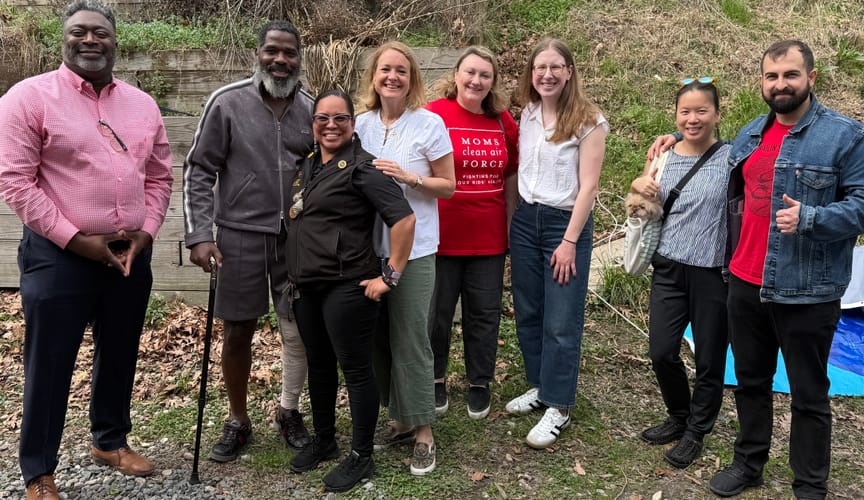
“The community is super bought into the idea that we are looking beyond dirty energy,” said Mondale Robinson, the 46-year-old mayor of this town about 30 miles south of the Virginia border, one of the poorest and Blackest in America.
Since late 2023, Robinson and the team who formed the Enfield nonprofit have been holding town hall meetings to vet and refine their ambitious goals for low-cost energy independence. Their plans include a town-run solar farm, a weatherization hub to help residents access grants for insulating their homes and upgrading appliances, and a revamp of the town’s dilapidated grid, which suffers frequent outages.
The geothermal project, called a thermal energy network, is part of this larger vision. The pilot project would serve an upcoming affordable housing development that Robinson is spearheading, made up of 34 townhomes in southeast Enfield. Eventually, the group hopes to expand the geothermal network to the entire town of some 2,000 — providing a sizable chunk of the community’s energy needs.
“If you’re a Black Enfield resident, either new or one with deep roots like myself, you know what permanent neglect looks like,” said Robinson, who grew up in a segregated part of town where indoor plumbing wasn’t a given, even in the 1980s. The thermal energy network, he said, could serve “as a model for what’s possible in rural Black spaces, throughout the Black Belt in North Carolina and the South at large.”
A political organizer and consultant who has worked around the world, Robinson returned to his hometown and was elected mayor during the Biden administration. Together with a coterie of climate advocates, academics, and other local leaders, Robinson hoped to tap funds from the 2022 Inflation Reduction Act, Biden’s signature climate law, and other government initiatives to help realize his vision for Enfield.
Then, President Donald Trump was elected. In a matter of months, Trump and the Republican Congress took a wrecking ball to federal support for clean energy — clawing back funds from Biden-era climate programs and drastically curtailing tax incentives for efficiency and renewable energy.
The Trump administration’s assault on clean energy has undoubtedly been a setback, said William Munn, a former regional director at Vote Solar who is now a consultant and acts as Enfield Energy Futures’ executive director. “The federal situation really screwed up our strategic plan,” he said.
But the group is determined to press on. “We’re being creative,” Munn said. “We’re finding ways to do all the things.”
The geothermal pilot project is a prime example.
Geothermal is among the few sources of carbon-free energy that survived last summer’s federal purge on tax credits. That means the Enfield project can access a 30% to 40% federal incentive so long as it begins construction by 2033 — and none of its components are produced by countries deemed a “foreign entity of concern.”
“With the tax credits still alive there, it just makes natural sense,” said Helen Whiteley, a climate entrepreneur and longtime member of the Enfield team.
With those federal incentives in mind, Whiteley and her cohorts last year recruited Eric Bosworth, who oversaw design of the Eversource thermal energy network in Massachusetts, to do the same in Enfield.
The term “geothermal” has many meanings, said Bosworth, who has since left Eversource and formed his own consultancy. “It can mean drilling miles down to generate electricity via steam. It can mean going a few thousand feet down and pulling hot water out. Or it can mean what we’re talking about, which is shallow geothermal.”
Either way, he emphasized, “the technology is not new. We know that it works.”
Indeed, shallow geothermal has been deployed by communities such as hospitals and universities for decades. But utility-sponsored projects linking individual homes have only recently begun to gain steam, with some 26 utility pilots underway across the country.
The collective nature of the networks helps make them cost effective, Bosworth said. That will be especially true of the Enfield pilot serving the new affordable housing development, which is expected to break ground this summer. Its homes won’t have to be retrofitted with ducts and other features to accommodate central heating and air conditioning.
Another factor keeping costs low: open trenches. Thanks to funds from a federal pandemic-relief law, the town will be replacing its aging water mains over the next year or so.
“Construction is so expensive. If you’ve got the equipment out there digging up sidewalks, and you’ve got to cement them over, why not just lay the geothermal piping at the same time?” said Whiteley, who hatched the plan to undertake the thermal energy network’s construction in conjunction with the water main replacement.
“If you’ve already got a trench open, and you’re just laying the pipe in,” Bosworth said, “you’re saving probably on the order of 50% of the costs.”
That the project will leverage existing infrastructure programs was a key source of appeal for BuildUS, a philanthropic foundation aimed at speeding the transition to a cleaner and more equitable economy. BuildUS distributed the nearly $300,000 grant to Enfield Energy Futures earlier this month.
“Enfield is showing how rural communities can lead the clean energy transition,” Jill Fuglister, the managing director, of BuildUS, said in a statement announcing the grant. “By aligning infrastructure upgrades, geothermal technology, and workforce development for the local community, this project demonstrates an equitable model that other towns can follow.”
Enfield Energy Futures is eager to use the thermal energy network for job training in the county, which has one of the state’s highest unemployment rates.
“Think about all the ancillary jobs and opportunities that came along with the industrial revolution with the steam engine,” Munn said. “We’re thinking about this in the same way.”
Perhaps above all, the pilot project would bring desperately needed relief for a town straining under the weight of unaffordable and unreliable energy. Electricity bills here average $650 a month in the winter.
“That is beyond oppressive,” Robinson said. “Our people are super excited about lessening their burden.”
A thermal energy network is essentially a network of ground-source heat pumps. They’re analogous to air-source heat pumps, which move heat from inside a building to outside to lower the temperature, and vice versa.
In a thermal energy network, heat moves between the indoors and the ground, rather than the air. An antifreeze water solution flows through a buried pipe, cooling or heating the surrounding earth, maintaining a steady temperature. That makes ground-source heat pumps roughly twice as efficient as air-source varieties.
“The physics are the same,” Bosworth said. “It’s just using the ground temperature instead of the air temperature, and that’s why you get a higher efficiency.”
While the technology works everywhere, it’s particularly cost-effective in areas that can experience extreme temperatures, such as North Carolina in the dog days of summer. And it’s four to five times more efficient than the electric baseboard heaters and window air conditioners prevalent in Enfield.
It’s also possible to add hot-water heating to the mix — increasing the balance that can be achieved in the closed-loop system.
“You have a lot of excess heat in North Carolina,” Bosworth said. “It gets really hot in the summer. You’re going to store all of that heat underground, and you may not pull all of it out in the winter, but if you add domestic hot water, suddenly the system looks a lot better.”
Between replacing hot-water heating and meeting heating and cooling needs, the network could have a huge impact on the average Enfield resident, cutting maximum household energy needs by as much as 70%.
Similarly, if the entire town gets connected to the thermal energy network, it could cut overall electricity demand by about half, though planners don’t have exact figures yet.
“What geothermal can do is just relieve a significant amount of pressure on the grid,” said Brian McAdoo, an associate professor at Duke University’s Nicholas School of the Environment, whose students will gather data this fall about how well the ground transfers heat in Enfield, to inform the project’s design.
McAdoo said less grid pressure would mean fewer outages in the town, which experienced a high-profile, four-day loss of power last summer. And with the town’s hoped-for solar farm, the thermal energy network would foster energy independence, backed up by the regional grid.
“Then you can use the backup and that excess capacity for more business,” McAdoo said. “That’s the dream, right?”
But plenty of obstacles still stand in the way of that dream, starting with the need to raise millions of dollars to complete the pilot, and to do so quickly enough to take advantage of the open trenches.
Nick Jimenez, senior attorney at the Southern Environmental Law Center and another key member of the Enfield coalition, remains optimistic.
“The grant shows the power of embracing and leading with a positive vision, particularly in communities that have seen historic underinvestment,” he said. “It takes courage to try something new, but when you do, people want to get behind it.”
Vermont’s first neighborhood-scale geothermal project is expected to break ground this summer as part of an affordable housing development, providing what developers hope is a blueprint for cost-effective, all-electric new construction in the Green Mountain State and beyond.
“We are decarbonizing and providing the natural energy of the earth to heat and cool our buildings,” said Amy Demetrowitz, chief operating officer of Champlain Housing Trust, one of the nonprofit developers behind the project. “The model is as awesome and as simple as that.”
Across the country, states with ambitious climate goals are looking for ways to cut emissions by weaning their buildings off natural gas and oil heat. Geothermal loops have emerged as a promising solution. These systems use emissions-free electric heat pumps to transfer thermal energy into and out of the earth, and deliver it to multiple households — not unlike pipes carrying water to homes across a neighborhood.
In 2024, utility Eversource launched a geothermal network in Framingham, Massachusetts, that includes some 140 retrofitted buildings; an expansion that will double the network’s size is in development. Work is underway in New Haven, Connecticut, on a geothermal system that will serve the city’s historic train station as well as about 1,000 units of public housing planned nearby.
The Vermont project is smaller; it will heat and cool 36 units at the Riggs Meadow development in the northern town of Hinesburg. An additional eight units and an on-site childcare center will have air-source heat pumps.
The geothermal project will have 12 to 16 boreholes drilled as far as 400 feet into the ground, where the temperature is a steady 45 to 50 degrees Fahrenheit year-round. In the cold weather, liquid pumped down these narrow wells will pick up heat from the earth and deliver it to the buildings above. In hot weather, the process will be reversed, with the system cooling the buildings by transferring heat back into the ground.
Champlain Housing Trust and Evernorth — another affordable housing developer partnering on the project — will foot the bill for the interior equipment, while utility Vermont Gas Systems will pay for and own the in-ground infrastructure, covering an estimated $275,000 in up-front costs that could be hard for a nonprofit like the trust to manage. Champlain Housing Trust, which covers utilities for tenants, will pay Vermont Gas a monthly “geothermal access fee” of $25 to $35 per unit to offset this spending.
“It’s not going to be wildly profitable for us, but it’s going to be a valuable learning experience as we figure out how we’re going to grow this over time,” said Neale Lunderville, president and CEO of Vermont Gas.
The plan took root in 2022 when Jan Blomstrann, former chair and CEO of Hinesburg-based renewable energy firm NRG Systems, donated 46 acres of land to Champlain Housing Trust for affordable housing development, specifying that she wanted the project to use renewable energy. The organization was already working toward decarbonizing its developments, so the request was a natural fit, Demetrowitz said.
At the time, Vermont Gas was considering ways to expand its offerings and keep its business strong as the future of natural gas becomes more uncertain in the face of climate regulations and shifting consumer demand. Currently, Vermont households rely heavily on fossil fuels to stay warm, but the state has a mandate to reduce greenhouse gas emissions by 80% by 2050 from 1990 levels. Decarbonizing home heating is a major element of the state climate plan.
With all that in mind, the utility in 2022 launched a program to sell or lease air-source heat pumps to customers. Geothermal seemed like an obvious next step, building on the company’s existing strengths, including managing long-term investments and installing and managing underground infrastructure.
“We’re really good at providing thermal energy services,” said Morgan Hood, director of product management for Vermont Gas. “There’s a lot of commonality with geothermal.”
While other projects, like the one in Framingham, have retrofitted existing neighborhoods to use geothermal, Vermont’s more dispersed population offers few places where enough households are close enough together for such an effort. Vermont Gas, therefore, set its sights on new construction.
Vermont Gas received a federal grant to study the feasibility of using a geothermal network at the Riggs Meadow development and to design the system. A second grant through the same program was expected to help pay for construction, but the Trump administration froze the funds, putting the project in limbo.
Instead of giving up, the team adapted. The original plan was for a geothermal network, a system that manages the diverse thermal needs of its different members: For example, the heat extracted by cooling a neighborhood ice rink might be used to warm an adjacent apartment building.
That initial scheme would have allowed Vermont Gas to learn valuable lessons about designing and managing a geothermal network, but the housing development didn’t actually require that level of complexity — generally, all the units would need either heating at the same time or cooling at the same time. This uniformity allowed Vermont Gas to shift to a simplified, lower-cost plan: Four buildings will each be served by their own geothermal loop. The company also decided not to pursue federal tax credits, as the cost of complying with the eligibility requirements would have outweighed the benefit.
“We had to pivot,” Hood said. “We needed to cut costs so we could still charge the customer base an acceptable amount.”
The partners hope this system, which is expected to be completed within a year, proves cost-effective enough to reproduce in future developments. As Vermont attempts to address housing shortages, geothermal systems could keep down both emissions and residents’ energy bills. But the approach has promise beyond local borders, Lunderville said.
“There are a lot of places across the country where we could replicate something just like this,” he said.
A correction was made on April 14, 2026: This story originally misstated how the geothermal access fee would be paid to Vermont Gas. The Champlain Housing Trust, not individual tenants, will pay the fee to the utility. The story was also updated to include the estimated cost of the project for Vermont Gas.
Fervo Energy, the leading next-generation geothermal startup, is ramping up plans to build out new power plants.
The Houston-based company has signed a three-year binding agreement with Turboden America, which will supply 1.75 gigawatts of organic Rankine cycle turbine capacity for Fervo’s forthcoming geothermal projects in the United States. The startup will use the equipment to convert heat pulled from deep underground into carbon-free electricity for data centers and the grid.
Fervo, which is reportedly preparing for an IPO, is currently building the first 100 megawatts of its 500-MW Cape Station in Beaver County, Utah. The project, which will be the world’s largest enhanced geothermal system, is slated to start producing power later this year.
Turboden America is already supplying over half of Cape Station’s total turbine capacity. The company, a subsidiary of the Italian manufacturer Turboden, says it will expand its U.S. operations to fulfill the deal, which calls for nearly three dozen 50-MW power-plant units.
The agreement, announced Tuesday, sheds more light on Fervo’s development plans beyond Cape Station, which broke ground about two and half years ago.
Fervo declined to share specific details about where and when it intends to deploy the new units. However, the company has “multiple projects in various stages of progress” and is pursuing “multi-year, multi-gigawatt offtake partnerships with both utilities and hyperscalers,” Sarah Jewett, Fervo’s senior vice president of strategy, told Canary Media in an email.
She added that the Cape Station site has an estimated 4.3 GW of capacity potential, based on internal and independent estimates. Fervo is also developing an enhanced geothermal system in Nevada, called Corsac Station, which is set to supply 115 MW of electricity to Google and the utility NV Energy.
This week’s development with Turboden “helps streamline project execution and accelerate deployment as our project pipeline advances,” Jewett said.
Together, Cape Station and the new turbines represent over 2.2 GW in geothermal power capacity. If completed and brought online, that amount would be equal to more than 50% of the current installed capacity of U.S. geothermal plants — which provide less than 1% of the country’s total electricity generation. Virtually all those existing plants rely on conventional hydrothermal resources, such as geysers and hot springs.
“Geothermal energy will be essential in stabilizing a strained power grid with clean, firm energy, and Fervo has shown strong leadership in advancing the sector,” Paolo Bertuzzi, president of Turboden America and CEO of Turboden, said in a statement. “With this announcement, we are prepared to scale delivery in the U.S. market and add megawatts of new generation wherever and however they are required.”
In signing the deal, Fervo and Turboden are aiming to avoid a potential bottleneck that threatens to slow the larger buildout of next-generation geothermal: the power-plant supply chain.
Today, the global market for organic Rankine cycle systems, heat exchangers, and other components is concentrated among a small set of manufacturers based in Israel, Turkey, and parts of Europe. Until very recently, those companies had little reason to scale production or revamp designs, given the sector’s limited growth. Most geothermal equipment is highly customized, and it can take over 18 months to bring it stateside.
“The ORC market has always been a very niche market and quite stable in the past,” Bertuzzi told Canary Media in an earlier interview.
But recent U.S. innovations in geothermal technology are making it possible to harness Earth’s heat from a wider range of places than conventional geothermal plants can reach. For instance, Fervo’s Cape Station uses horizontal drilling techniques and fiber-optic sensing tools to fracture hard, impermeable rocks and create artificial reservoirs. The startups Sage Geosystems and Quaise Energy are taking a similar approach, while companies like Rodatherm Energy and XGS Energy are building novel closed-loop systems deep underground.
Turboden, which is owned by Mitsubishi Heavy Industries, said it can presently deliver about 20 of its 50-MW turbine units per year. Nearly half of its global business is from the geothermal industry. The rest is from biomass-burning power plants as well as industrial facilities that use waste heat to generate electricity, such as data centers and gas-compressor stations.
The manufacturer is now set to scale production in both Italy and the United States in order to meet the growing demand from next-generation geothermal developers like Fervo. In an email, Turboden said it is adopting “multiple business and procurement models … to ensure larger volumes and faster delivery times, including domestic content to support tax credit mechanisms for American customers.”


.svg)
